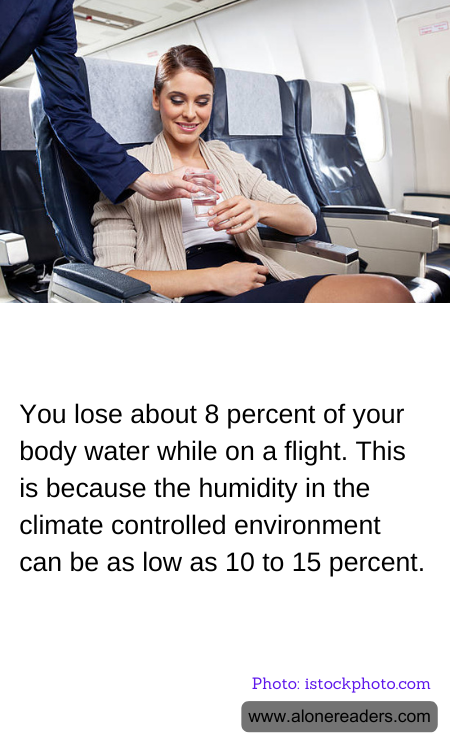
Traveling by airplane can dehydrate you faster than you might expect. One reason for this is the low humidity levels found in the cabin atmosphere. Typically, the humidity on airplanes can plummet to between 10 and 15 percent, which is significantly lower than what most people are accustomed to. For reference, the average indoor humidity tends to range between 30 and 50 percent. This stark difference is due to the fact that the air at high altitudes is much thinner and contains less moisture.
When you are in such a dry environment for an extended period, like during a long flight, your body loses water through every exhale. You might notice this as dryness in your throat or skin. In fact, it's estimated that on a 10-hour flight, a passenger might lose up to 8 percent of their body water. This dehydration can contribute to the feelings of jet lag such as fatigue, headaches, and dizziness.
To combat this, it’s important to stay hydrated by drinking plenty of water before, during, and after your flight. Avoiding diuretics such as alcohol and caffeine, which can exacerbate dehydration, is also advisable. Some frequent flyers also recommend using moisturizing nasal sprays and hydrating skin care products to help offset the drying effects of the cabin air. By taking these precautions, you can help maintain your hydration levels and feel more comfortable during your journey.
