Animals experience the world through a sensory palette quite different from that of humans, driven by the unique needs of their ecological niches and evolutionary histories. For example, the common belief that bulls become enraged by the color red is a myth; these animals are actually red colorblind. The typical behavior of a bull charging during a bullfight is not a reaction to the color of the matador's cape but rather to the cape's movement. Bulls, like many other ungulates, are better at detecting motion, which helps them spot predators or any potential threats swiftly.
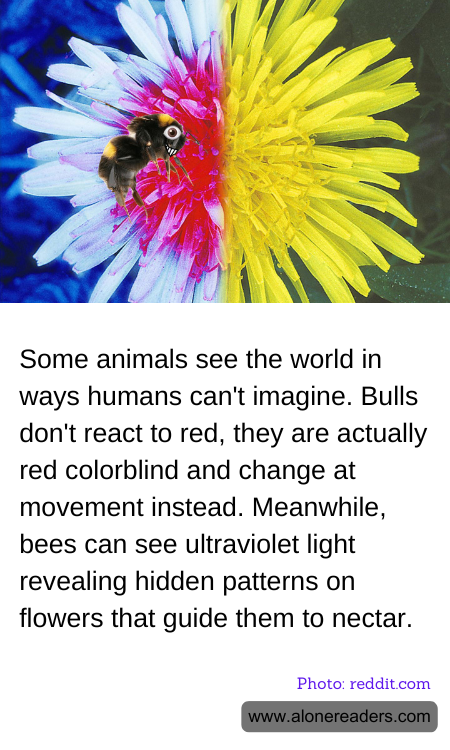
The fascinating world of bees offers another glimpse into perceptual differences. Bees have the ability to see ultraviolet light, a part of the spectrum that is invisible to the human eye. This ability plays a crucial role in their feeding habits and, subsequently, in the process of pollination. Flowers often have ultraviolet markings, which are invisible to humans without special equipment, that act like visual guides for bees, leading them directly to the source of nectar. These patterns can be quite elaborate, sometimes resembling a bullseye or a runway landing strip, ensuring the bee navigates straight to the flower’s reproductive organs. This not only facilitates an efficient feeding strategy for the bees but also enhances the flower’s chances of being pollinated.
Such adaptations highlight the intricate ways in which life on Earth has evolved. Different species have developed sensory abilities that are finely tuned to their survival and reproductive needs. This diversity in sensory perception not only broadens our understanding of animal behavior but also enriches our appreciation for the complexity of life and the various ways organisms interact with their environment. It's a vivid reminder of the myriad ways life thrives on Earth, often invisible or incomprehensible to humans, yet crucial for maintaining the balance of our planet’s ecosystems. The study of these unique animal perspectives not only fascinates but also provides potential insights into new technologies and methodologies that could benefit humanity, drawing inspiration from nature’s own solutions to complex problems.
