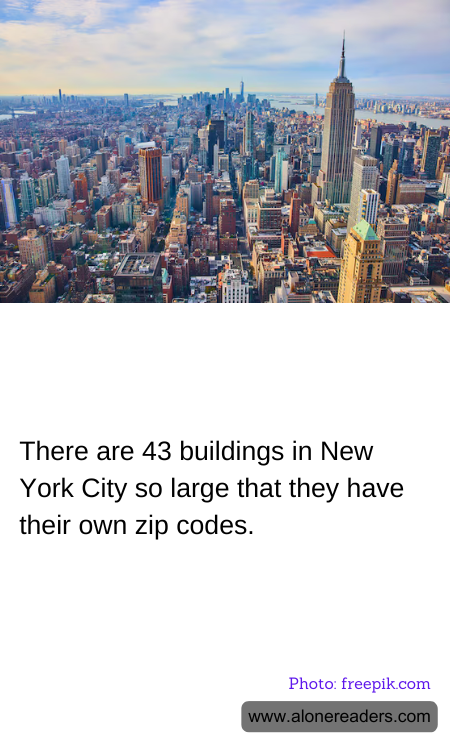
In New York City, the concept of a building having its own ZIP code may seem extraordinary, but for 43 such structures, it's a reality. This unique situation primarily arises from the immense size or the significant number of occupants within these buildings. Among these, perhaps the most famous example is the Empire State Building, which is designated 10118. Such an arrangement is not merely a quirk of postal administration but a necessity driven by the logistical demands of handling vast volumes of mail and deliveries efficiently.
These buildings often encompass a mix of corporate offices, retail outlets, and sometimes residential units, contributing to high daily foot traffic and a consequent high volume of mail and packages. The decision to allocate a unique ZIP code is made by the United States Postal Service and is intended to streamline mail sorting and delivery processes, ensuring swift and accurate service. This system not only benefits the postal service by reducing complexity in mail sorting but also enhances the delivery experience for tenants and businesses operating within these buildings.
The existence of such ZIP codes highlights the vertical urban density characteristic of New York City and underscores the city's architectural and economic magnitude. Buildings with their own ZIP codes often become landmarks not only due to their size but also because of their significance in the city's skyline and their role in New York's economy. For postal workers, these buildings are like small towns, each with its own distinct needs and challenges.
Moreover, having a unique ZIP code adds a layer of prestige to a building and can be marketed as a feature to attract high-profile tenants. It reflects on the scale and the importance of the activities taking place within these mammoth structures. For the everyday citizen or tourist, these buildings and their unique ZIP codes often go unnoticed, but they are crucial cogs in the city’s bustling engine, epitomizing New York’s status as a world-renowned metropolis where even the buildings can be significant enough to warrant their own postal identity.
