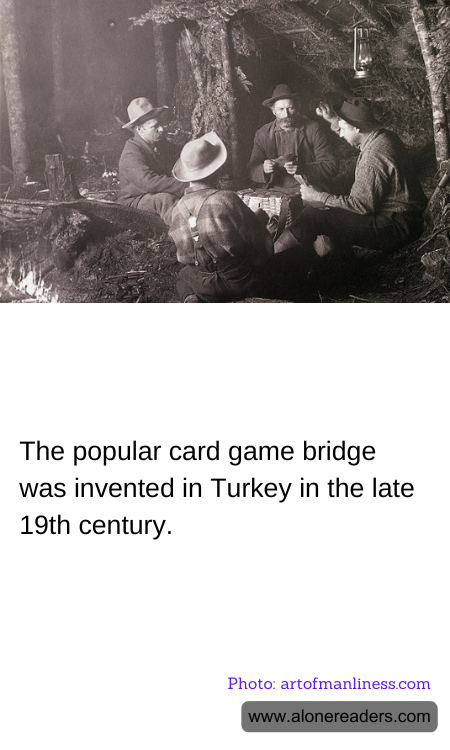
The popular card game bridge, which was indeed invented in the late 19th century, has its origins rooted in the broader family of trick-taking games that date back centuries. While there is a common belief that bridge originated in Turkey, this is in fact a misconception. The game actually evolved from older card games such as whist and was developed further by the British. The earliest version of what today is recognized as bridge was called "biritch," which is thought to have originated in the Middle East, not specifically Turkey. The name "biritch" is believed to be a derivative of a Russian word for announcer or herald, reflecting the aspect of the game involving the declaration of intentions.
Throughout the twentieth century, bridge underwent significant transformations, evolving into the highly strategic and complex game it is today. The game became especially popular in the United States and Western Europe, with various forms including auction bridge and, later, contract bridge. Thanks to the efforts of personalities like Harold Vanderbilt, who introduced scoring innovations and refinements in the 1920s, contract bridge became the more dominant and sophisticated version played around the world. Bridge clubs and tournaments started to form, and the game was propelled to further popularity as a competitive and social pastime.
Bridge is unique for its combination of memory, strategy, and partnership. Players must work closely with their partners to bid contracts and then attempt to fulfill them by winning tricks. It is one of the few card games that not only requires keen playing skills but also intense cooperation and communication between partners. Today, bridge is recognized globally, with millions enjoying the game both casually and in highly organized competitive events, underlining its ongoing appeal and dynamic nature as a staple of card gaming culture.
