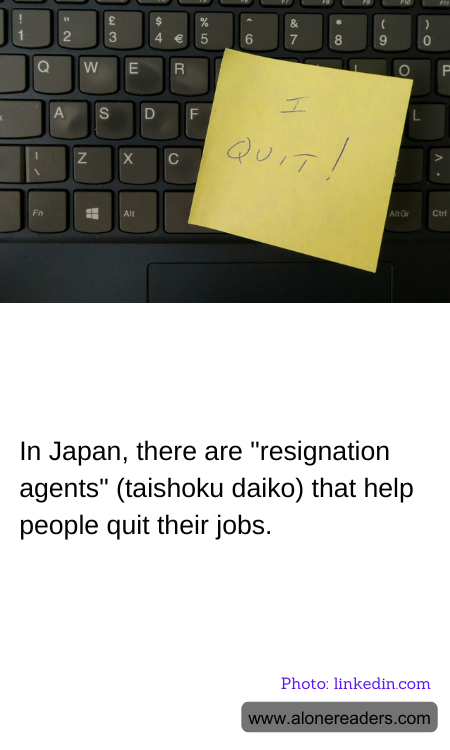
In Japan, a unique service has emerged to cater to workers who are looking to resign from their jobs but find the situation too daunting or stressful to handle on their own. These services, known as "resignation agents" or taishoku daiko, assist individuals in navigating the often delicate process of quitting their jobs.
The cultural context in Japan adds layers of complexity to the resignation process. In many Japanese companies, there is still a strong culture of lifetime employment and loyalty to one's employer. This makes the act of resigning not just a personal career decision but a move that can be perceived as a betrayal or failure to commit. Furthermore, the formalities and indirect communication styles prevalent in many traditional Japanese workplaces can make the process of resigning even more challenging.
Resignation agents step in to provide a professional and smooth transition for those looking to leave their jobs. For a fee, these agents handle everything from submitting resignation letters to negotiating exit terms. The services they offer are particularly valuable for employees who may worry about backlash, burning bridges, or simply do not know how to approach the conversation with their employer. They are trained to ensure that the resignation process maintains the dignity and respect of both parties involved.
Clients of resignation agents vary widely, from those in executive positions to part-time workers. The common thread is the desire to leave a position with as little friction as possible. These services have grown in popularity, suggesting that despite changes in the job market and employment practices, the pressure and anxiety associated with resigning from a job are still significant issues for many workers.
The emergence of resignation agents highlights a broader trend in Japanese society where more people are beginning to prioritize personal well-being over traditional norms of loyalty and perseverance at work. While these services may not yet be common elsewhere, they reflect a changing attitude towards work-life balance and personal career management. As workplace cultures continue to evolve globally, the concept of resignation agents could potentially offer a new way to support employees in transition, ensuring that career changes are handled with care and professionalism.
