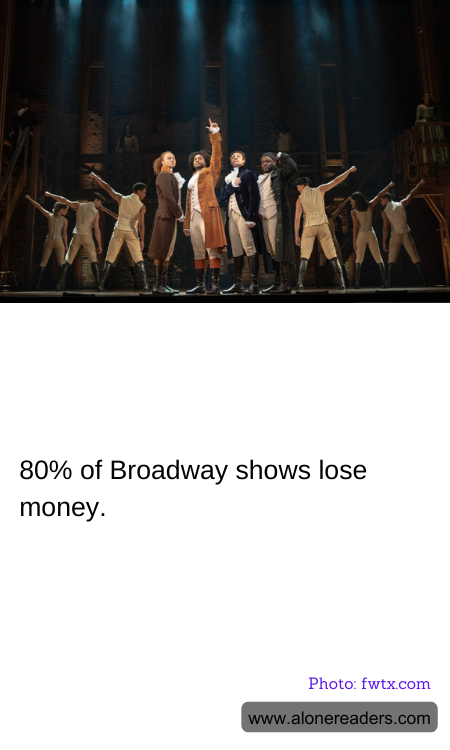
Broadway, the pinnacle of American theatre, is renowned for its dazzling productions, captivating performances, and innovative storytelling. However, despite its glamour and prestige, the financial reality of Broadway productions is anything but glittering. A staggering statistic reveals that 80% of Broadway shows end up losing money. This might come as a surprise to many, considering the high ticket prices and the crowded theaters, but the economics of Broadway is complex and laden with financial peril.
The production of a Broadway show is a monumental financial undertaking. Costs can skyrocket due to various factors including high production values, expensive set designs, costumes, and the fees associated with securing top talent. The initial investment to bring a show to Broadway can easily run into several million dollars. After the curtain rises, the running costs per week, which include theater rental, salaries for cast and crew, marketing, and more, continue to drain finances. For a show to break even, it must consistently fill a substantial percentage of its seats, often at high ticket prices.
Given the high stakes, why do producers gamble on Broadway? The allure comes from the rare but significant payoff seen in blockbuster hits like "The Phantom of the Opera," "Hamilton," or "The Lion King." These successes not only recoup their initial investments but go on to generate enormous profits, sustaining long runs and sometimes spawning tours and international productions. However, these hits are the exception rather than the rule.
One of the key challenges is the shifting taste of audiences, which can be highly unpredictable. Furthermore, the competitive landscape of Broadway means new shows are constantly vying for the attention of both critics and audiences, competing not just with each other but also with an ever-increasing array of entertainment options outside of traditional theatre.
Marketing plays a crucial role in the fate of a Broadway show. A show’s success is often bolstered by how well it can engage potential audiences. Positive reviews from influential critics and word-of-mouth can significantly impact ticket sales. Awards and recognitions, such as the Tony Awards, also drive interest and audience numbers. Nevertheless, even with strong marketing, a show may simply not resonate with audiences, leading to early closures and financial losses.
Despite these substantial risks, the dream of producing a hit Broadway show continues to attract investors and theatre professionals. They are driven not only by potential financial returns but also by a passion for the arts and the magic of live theatre. Each new production is a gamble, launched with the hope that it will capture the hearts and imaginations of audiences, achieving artistic success and financial viability against the steep odds.
