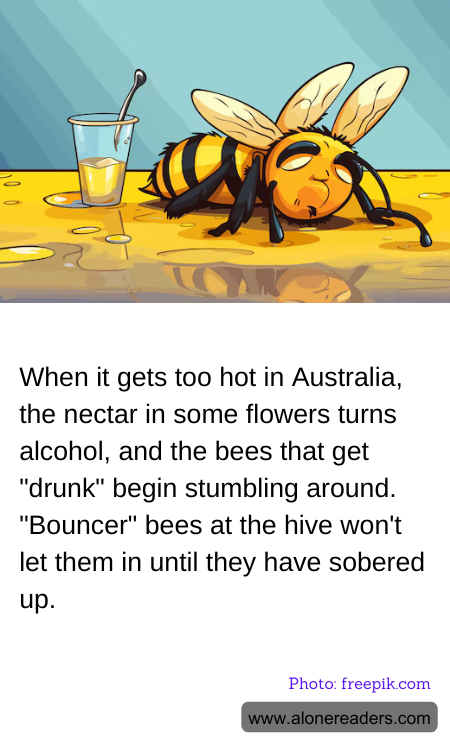
In the unique and extreme conditions often found in Australia, high temperatures can cause a fascinating phenomenon within the ecosystem. Specifically, the nectar inside some flowers can ferment and turn into alcohol due to the intense heat. Bees, drawn to these flowers for their nectar, inadvertently consume the fermented nectar and essentially become "drunk." These intoxicated bees exhibit unusual behavior, such as uncoordinated flying, stumbling, and difficulty in returning to their hives.
This situation within the hive itself becomes even more interesting due to the role of "bouncer" bees. These bees have the job of guarding the entrance of the hive and ensuring that only sober, well-functioning bees are allowed entry. When the forager bees return in their inebriated state, the bouncer bees deny them entrance until they have sobered up. This protocol helps maintain order within the hive and prevents the potential disruption that intoxicated bees could cause to the hive’s operation, including the dilution of the hive's honey with lower quality, fermented nectar.
The process by which bees sober up involves spending time outside the hive, metabolizing the alcohol from their systems. It is an exemplary showcase of natural adaptation and social regulation within a species, ensuring the colony remains productive and healthy. These behaviors underline the complex social structures and surprising biological adaptations found in nature, particularly in environments as challenging as those encountered in parts of Australia. This phenomenon highlights not only the resilience of bees but also their ability to enforce social rules that protect the interest of their colonies.
