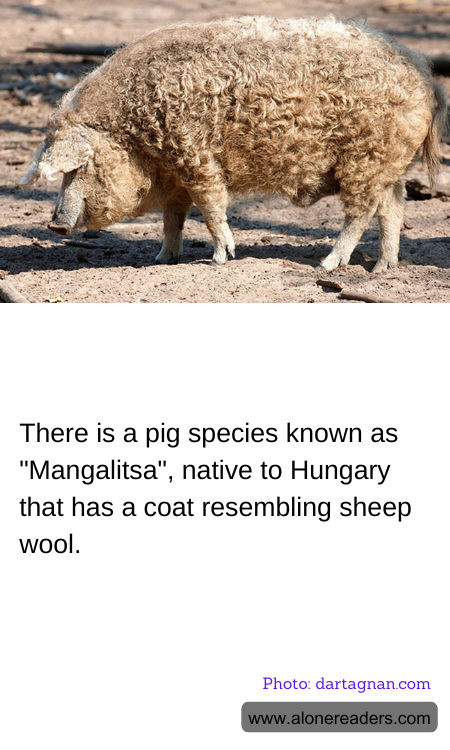
The Mangalitsa pig, sometimes spelled Mangalica, is a unique breed of domestic pig originating from Hungary. Known for its distinct appearance, the Mangalitsa sports a thick, curly coat that closely resembles the wool of a sheep. This characteristic sets it apart from most other pig breeds, which typically have much shorter, smoother hair. The breed comes in three main varieties: the Blonde Mangalitsa, the Swallow-bellied Mangalitsa, and the Red Mangalitsa, each defined by the color of their woolly coat.
This breed was developed in the early 19th century by crossbreeding Hungarian breeds with European wild boar and other pig breeds. The Mangalitsa was primarily raised by Hungarian royalty and nobility and was prized not only for its unique appearance but also for its lard. The Mangalitsa pig produces a high-quality fat that was in great demand during the era when lard was a pivotal ingredient in European cooking.
However, with the decline in lard popularity and the rise in demand for leaner meats in the 20th century, the Mangalitsa's numbers dwindled, pushing it to the brink of extinction. Interest in the breed has revived in recent years, thanks in part to the gourmet food market. Chefs and food connoisseurs value the Mangalitsa for its flavorful, marbled meat, which is high in fat and considered superior for charcuterie and other pork dishes. The fat of the Mangalitsa pig is also rich in unsaturated fatty acids, which has sparked a renewed appreciation from a health perspective.
Today, while still relatively rare, Mangalitsa pigs are being raised by small-scale farmers in Hungary and other parts of Europe, as well as in the United States. The breed's resurgence is linked closely to sustainable farming practices and the slow food movement, which emphasize the quality of ingredients and the welfare of livestock. Conservation efforts are crucial in maintaining the genetic diversity and heritage of traditional breeds like the Mangalitsa, ensuring that they continue to contribute to agricultural biodiversity and gourmet cuisine.
