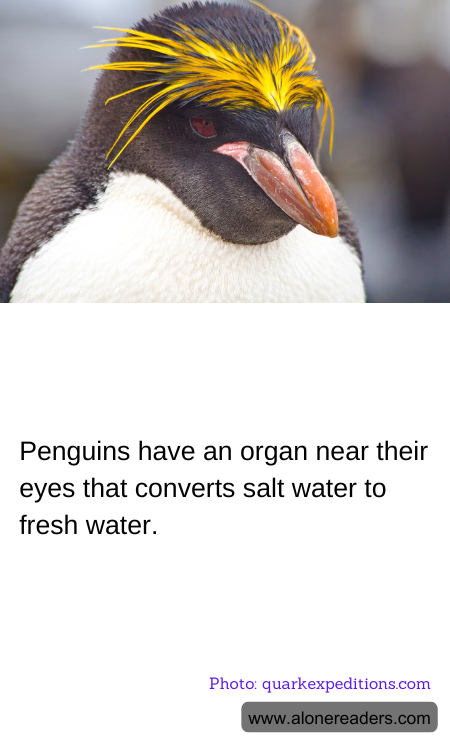
Penguins are remarkable creatures not only for their charismatic appeal but also because of their extraordinary adaptations to life in harsh environments. One of the most fascinating adaptations penguins have developed is an organ near their eyes, commonly referred to as the supraorbital gland. This gland plays a crucial role in allowing penguins to thrive in marine habitats where freshwater is not readily available.
Living in salty ocean environments poses a significant challenge for many marine birds due to the potential for dehydration. Penguins, like many other sea birds, ingest a lot of saltwater while feeding on fish, cephalopods, and crustaceans. The supraorbital gland helps them manage this salt overload. This gland functions somewhat like a desalination unit. It filters the bloodstream, removing excess salt from the body. The salt is then excreted through the nasal passages in the form of a concentrated saline solution.
The process is highly efficient, enabling penguins to drink sea water safely when necessary. The gland's position near the eyes is crucial as it facilitates the easy expulsion of salt without harming the sensitive ocular area. Instead, the salty solution dribbles down from the nasal passages near their beak, often giving the appearance that the penguins are crying.
This adaptation is vital for penguins, especially during long foraging trips at sea, where freshwater sources are non-existent. By being able to process sea water, penguins can remain at sea for prolonged periods. This capability also means they are less dependent on land-based freshwater sources, which enhances their survival strategies in their extreme living conditions.
The presence of the supraorbital gland is a perfect example of how evolution shapes physiology in response to environmental demands. It not only underscores the uniqueness of penguin biology but also highlights the intricate balance of marine ecosystems. Thus, penguins are equipped not just to survive but to thrive in their saline territories, showcasing the incredible adaptability of wildlife in response to natural challenges.
