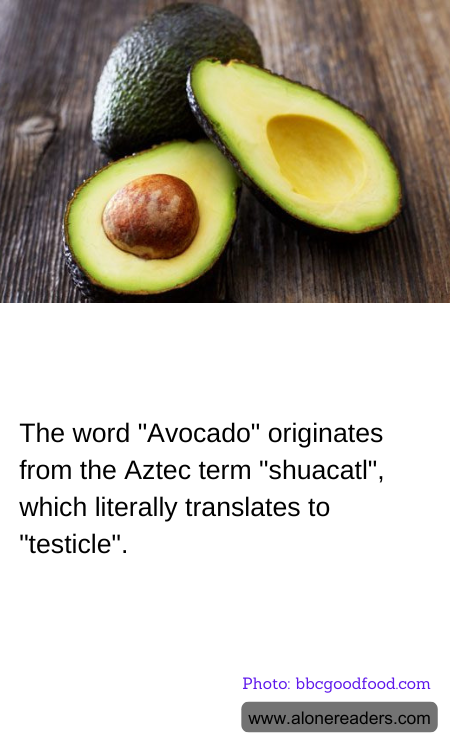
The word "avocado" has a surprising and somewhat amusing etymology that traces back to the Aztec language, Nahuatl. The term "ahuacatl," which sounds similar to "avocado," means "testicle" in Nahuatl. This name was likely chosen either due to the shape of the fruit or because avocados were considered aphrodisiacs by the Aztecs. The resemblance to the male reproductive organ might not be immediately obvious to everyone, but the association could also stem from the fruit's growth in pairs on the tree, resembling testicles.
As avocados were introduced to the Spanish explorers in the 16th century, the word "ahuacatl" underwent a transformation. The Spanish, finding the original Nahuatl term difficult to pronounce, adapted it to "aguacate," a term still used in Spanish-speaking countries today. Eventually, "aguacate" evolved into the English "avocado." Interestingly, the initial English-language references to this fruit in the early 17th century described it as "avogato pear," indicating its pear-like shape and perhaps a corruption of "aguacate."
The growth in the popularity of avocados in global cuisine has detached the fruit from its risqué origins and transformed it into a symbol of healthy eating and wellness. Loaded with nutrients, good fats, and vitamins, avocados have become a staple in diets around the world, celebrated for their health benefits as much as their creamy, rich taste and texture. Whether enjoyed in guacamole, sliced on toast, or used in smoothies, the avocado has transcended its humble beginnings to become a beloved and wholesome ingredient in diverse culinary cultures. Yet, the quirky historical footnote about its original name adds an amusing layer to our enjoyment of this versatile and nutritious fruit.
