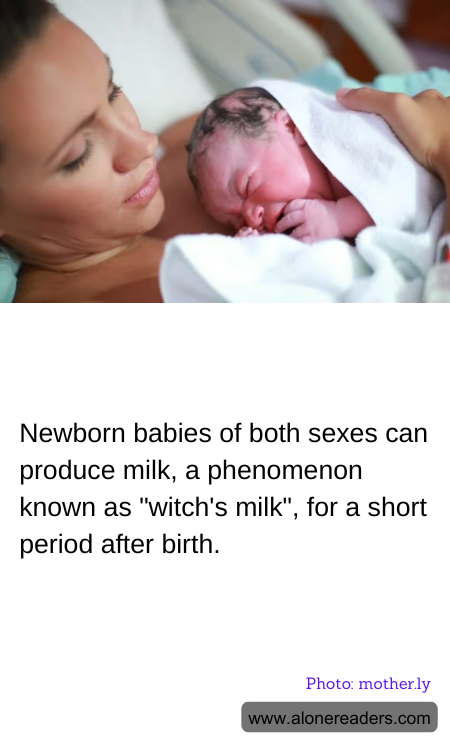
The production of milk by newborn babies, commonly referred to as "witch's milk," is a fascinating and little-known phenomenon that occurs in both male and female infants. This condition typically arises due to the influence of maternal hormones on the baby during the final stages of pregnancy. Specifically, high levels of estrogen from the mother can stimulate the newborn's mammary glands, leading to the production of a milk-like substance in the first few weeks of life.
Witch's milk is generally harmless and usually disappears on its own within a few weeks as the levels of maternal hormones in the baby's system decrease. It is estimated that witch's milk can occur in about 5% of newborns globally, although the incidence may vary and not all cases are reported or noticed by parents.
Despite its benign nature, this phenomenon can sometimes lead to confusion and concern among new parents. The milk production is usually quite minimal and does not require any intervention. However, in rare cases, the baby’s breasts can become swollen or even infected, prompting a need for medical attention. Simple measures, such as keeping the area clean and dry, are generally sufficient to manage this condition. It is important for healthcare providers to reassure parents and explain the transient nature of witch's milk, ensuring them that it does not have any implications for the future health or sexual development of the child.
Overall, witch's milk is an interesting example of how deeply interconnected the biological systems of the mother and baby are. Even after birth, the influences of maternal hormones can manifest in unexpected ways, showcasing the complex nature of human development right from the earliest stages of life. Understanding such phenomena can help demystify the parenting experience and foster a deeper appreciation for the intricacies of newborn physiology.
