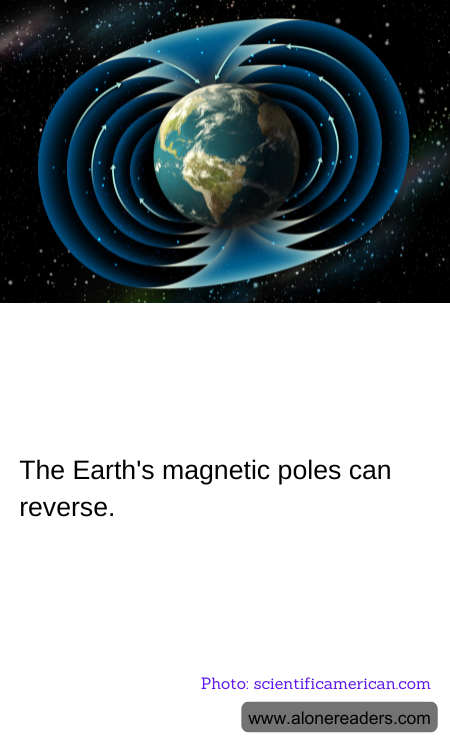
The Earth’s magnetic field is a fascinating and dynamic force that not only guides compasses but also shields the planet from solar radiation and cosmic rays. This magnetic field is largely generated by the churning of molten iron within Earth's outer core. Intriguingly, the configuration of this magnetic field is not fixed; it can completely flip, a phenomenon known as a geomagnetic reversal, during which the magnetic north and south poles swap places.
Geomagnetic reversals are not sudden but unfold over thousands of years. They are not regular or predictable but occur at random intervals, ranging from tens of thousands to millions of years. The last reversal, known as the Brunhes-Matuyama reversal, occurred approximately 780,000 years ago.
The process begins with the weakening of the Earth's magnetic field, which then becomes increasingly unstable. During this period, the existing poles gradually diminish in intensity and new poles begin to emerge, often at low latitudes. As the reversal progresses, multiple poles might appear at various locations around the globe, leading to a complex and fluctuating magnetic field. Eventually, the original magnetic poles fade away completely and the new poles solidify their positions at the opposite ends of the axis, completing the reversal.
While the thought of a pole reversal might sound alarming, there is currently no evidence to suggest that it would lead to catastrophic consequences for life on Earth. However, it could have implications for navigation systems and migratory wildlife that rely on the Earth's magnetic field, and could increase Earth's vulnerability to solar storms and cosmic rays, affecting satellite and communication technologies.
Although scientists continue to study and monitor the Earth's magnetic field, predicting the exact timing and implications of the next reversal remains challenging due to the complex nature of the forces driving the magnetic field’s dynamics. The continuous study of past geomagnetic reversals helps to refine the understanding of the processes involved and the potential impacts of such reversals in modern times. With ongoing research and technological advancements, our readiness to address these challenges continues to improve, helping to mitigate potential risks associated with future geomagnetic reversals.
