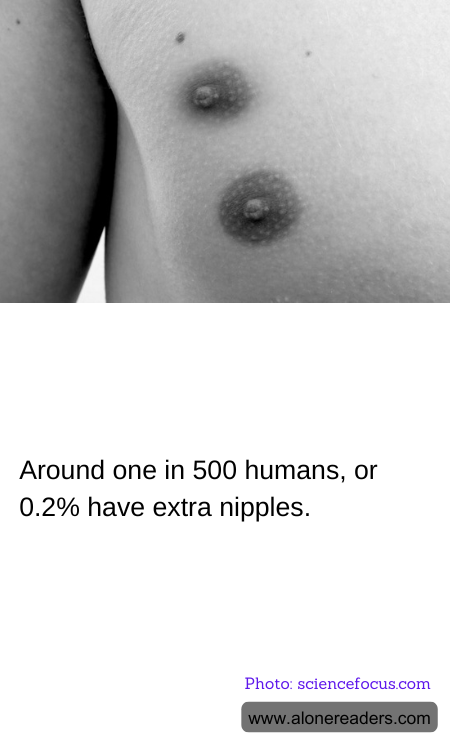
Supernumerary nipples, or extra nipples beyond the usual two, are a fascinating example of human diversity and an intriguing footnote in the study of human developmental biology. The condition, medically termed polythelia, occurs in approximately 0.2% of the population, affecting both males and females equally. This developmental anomaly originates during the early stages of embryonic development when the mammary ridges, which eventually develop into the milk lines, sometimes leave behind remnants that can develop into additional nipples.
These extra nipples usually appear along the “milk lines,” which extend from the armpits down to the groin area. They can vary greatly in appearance, sometimes looking like moles or freckles, and are often mistaken for other skin lesions. Most of the time, they are medically harmless and do not perform any function. However, in rare cases, they can develop glandular tissue, which means they might be able to produce milk, though this is exceedingly uncommon.
The presence of extra nipples has been stigmatized in many cultures, possibly because of their rarity and deviation from the norm. In modern medicine, these nipples are not viewed as problematic unless they cause discomfort or become a cosmetic concern for the individual. From a clinical perspective, they are typically left untreated unless they cause irritation or are misidentified as malignant.
The occurrence of extra nipples also opens up broader discussions in genetics and evolutionary biology. From an evolutionary standpoint, the presence of multiple nipples is not unusual in the animal kingdom. Many mammals, particularly those with larger litters, have several rows of nipples to feed their young. The phenomenon in humans is thus a lingering trace of our mammalian ancestry, showcasing a fascinating aspect of human evolutionary history.
Understanding such quirks in human anatomy not only provides insight into genetic variation but also challenges our perceptions of 'normalcy' and 'abnormality' in human bodies. This biological curiosity, although small, invites more extensive questions about the complexity of human development and the intricate processes that define our physical selves.
