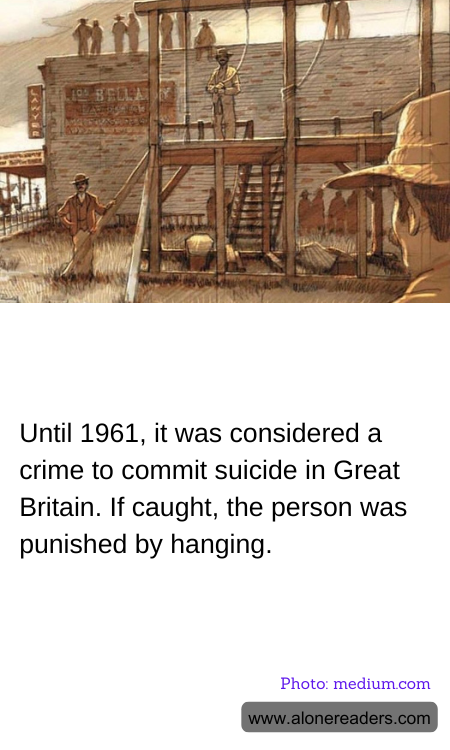
The history of suicide legislation in Great Britain reflects deep-seated societal and legal attitudes towards the act. Until 1961, suicide was indeed treated as a criminal act under English common law. However, the common assertion that those who attempted suicide and failed could be punished by hanging is a misconception. In fact, while suicide was legally a crime, the punishment for a failed attempt was not death by hanging but could include fines or imprisonment.
The classification of suicide as a felony originated from religious beliefs that considered life to be a gift from God, with any attempt to end one's life seen as a sin and an offense not only against oneself but also against God. Under these laws, those who succeeded in taking their own lives could be subjected to posthumous punishments. These included being buried in un-consecrated ground, often at crossroads, without any Christian rites, and having their properties confiscated by the state, which could leave their families destitute.
The Suicide Act of 1961 was a landmark in changing these perceptions. It decriminalized the act of suicide so that individuals who attempted and failed were no longer subject to criminal penalties. This significant legal shift reflected broader changes in social attitudes towards mental health and compassion for those experiencing psychological distress. Rather than approaching suicide as a criminal matter, it began to be seen more as a public health and moral issue, with an emphasis on understanding and prevention.
While no longer a crime, suicide and its facilitation remain complex issues under British law. Assisting or encouraging someone to commit suicide is still illegal and can lead to up to 14 years in prison under the 1961 Act. This reflects ongoing ethical debates about autonomy, the sanctity of life, and how society should respond to the suffering of its members.
Overall, the evolution of suicide legislation in Great Britain from a criminal act punishable by severe sanctions to a decriminalized act reflects significant shifts in legal and societal norms, particularly in the understanding of mental health and human compassion. The modern approach focuses more on prevention, mental health support, and therapeutic interventions rather than punitive measures.
