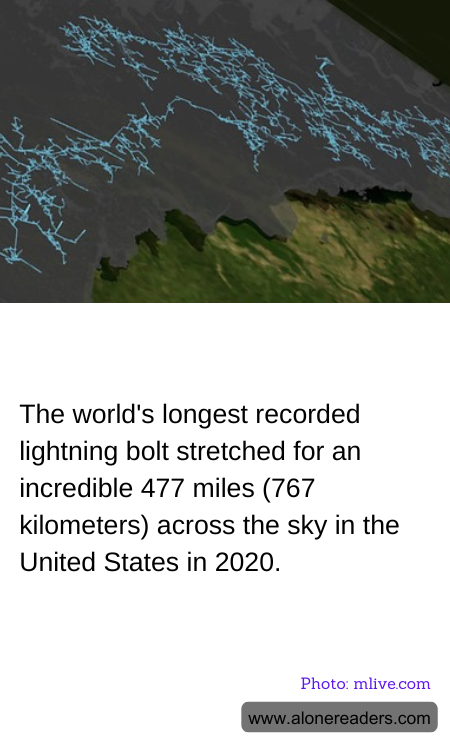
Lightning is one of nature's most astonishing phenomena, showcasing the powerful forces that operate within our atmosphere. In 2020, a record-breaking lightning bolt over the United States dramatically illustrated this natural power, covering a staggering distance of 477 miles (767 kilometers). This event surpassed previous records, underlining an important point about the vast reach and potential impact of atmospheric electrical discharges.
Such extraordinary lightning events are recorded by the World Meteorological Organization (WMO), which tracks weather and climate-related phenomena. The immense scale of this particular lightning strike is significant not only as a record but also in terms of the scientific insights it provides into the behavior of thunderstorms and the extremes of weather they can produce. It forces meteorologists and scientists to reconsider what is possible and to improve predictive models that can forecast severe weather, potentially saving lives.
The extended length of the lightning bolt also raises interesting questions about the changing climate. Some researchers suggest that as the planet warms, the atmosphere becomes more charged and capable of producing more extreme weather events, including longer and possibly more dangerous lightning. Investigating these phenomena helps improve our understanding of the relationship between climate change and atmospheric dynamics.
Lightning strikes, while fascinating to study, pose significant risks to life and property. The energy carried by a single lightning flash is immense, capable of setting forests ablaze, damaging structures, and disrupting power supplies. The 477-mile bolt serves as a stark reminder of why respecting and understanding our planet’s electrical weather events is crucial. For the communities living under these expansive thunderstorm systems, awareness and precautionary measures become even more paramount, necessitating robust early warning systems and public education on safety practices during severe weather events.
Thus, monitoring and researching record-setting lightning events are essential for enhancing our predictive capabilities and developing strategies to mitigate their impact. Each record provides valuable data that can refine our understanding of how such extreme natural phenomena function and evolve, shaping our preparedness for future meteorological challenges.
