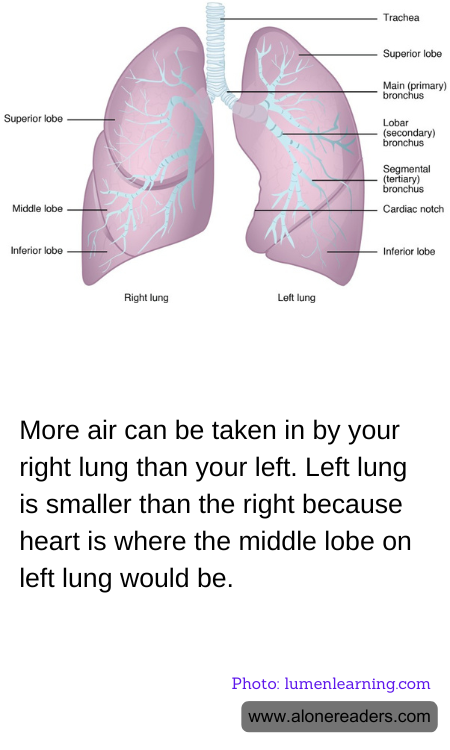
The human respiratory system is a marvel of biological engineering, with the lungs playing a pivotal role in this essential function. Interestingly, the two lungs in the human body are not symmetrical or equal in size. The right lung is larger and can hold more air compared to the left lung. This difference in size and volume is primarily due to the position of the heart within the chest cavity.
The right lung is divided into three lobes — the superior, middle, and inferior lobes — making it broader and somewhat shorter than the left lung, which is divided into only two lobes, the superior and inferior. This anatomical difference allows the right lung to have a slightly greater capacity for air than its counterpart. In contrast, the left lung is smaller, largely because it must accommodate the heart. The heart, positioned slightly to the left of the midline in the thoracic cavity, encroaches upon the space where the middle lobe of the lung would otherwise be in the case of symmetry.
This arrangement is crucial for providing the heart with protection while maximizing the efficiency of the lungs. Despite the difference in size, both lungs are incredibly efficient at oxygenating blood and removing carbon dioxide from the body. This asymmetric design does not typically impact the overall functionality of the respiratory system under normal conditions. However, it does highlight the intricate balance and complex anatomical relationships within the human body, ensuring that every organ efficiently performs its function within the limited space of the human torso.
