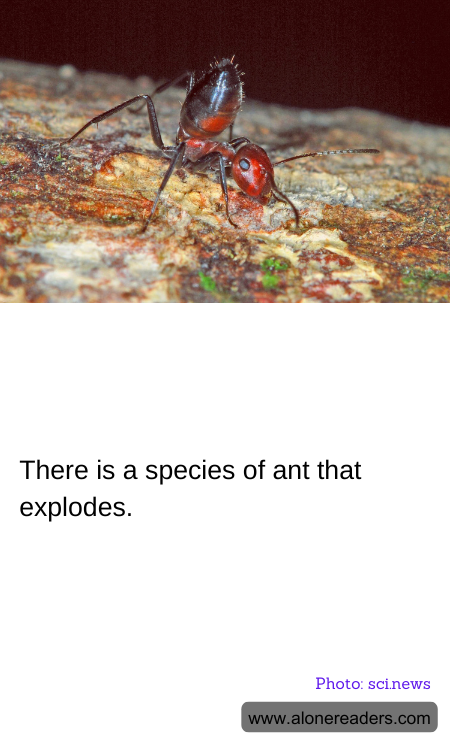
In the lush rainforests of Southeast Asia, a peculiar and dramatic survival strategy has evolved in the Colobopsis explodens, commonly referred to as the "exploding ant." This small, reddish-brown ant has developed an extraordinary and self-sacrificial method of defending its colony from predators and rival insects. When threatened, workers of this species can intentionally rupture their body walls, releasing a sticky, toxic substance from their glands located near their abdomen.
This defensive tactic, termed autothysis, essentially causes the ant to sacrifice its life for the protection of its colony. The toxic secretion is not only sticky but also contains chemicals that are irritant and corrosive, capable of deterring or even disabling attackers. This mechanism is particularly triggered when the ants confront large predators or when their nest is disturbed.
The exploding ant plays a critical role in the ecosystem of their rainforest environment. By curbing the populations of potentially harmful insects and other arthropods, they contribute to the biodiversity and the ecological balance of their habitat. Additionally, their explosive defense mechanism discourages larger animals from disturbing their colonies, thereby securing the survival of their species.
Researchers continue to study the exploding ant to understand better the evolutionary advantages conferred by such a drastic defense strategy. It is a vivid example of the extreme lengths to which nature can go to ensure the survival of a species. The study of the exploding ant not only adds to our understanding of entomological defense mechanisms but also potentially offers insights into new natural products that could be adapted for use in medicine or agriculture.
