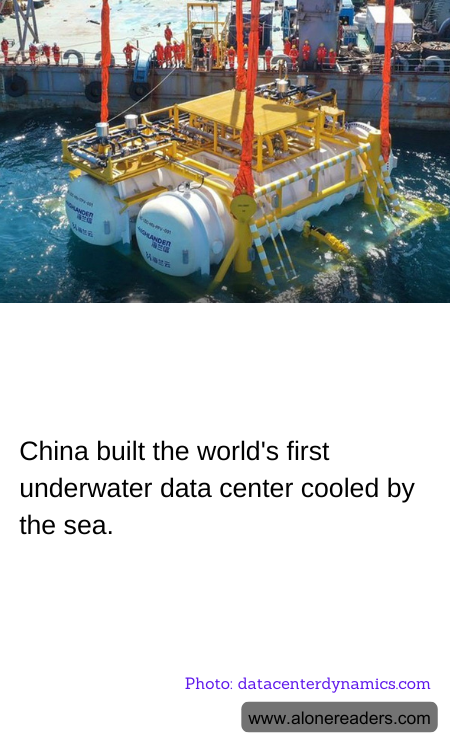
China has made a significant technological advancement with the launch of the world’s first underwater data center that utilizes the cooling properties of seawater. This innovative project, designed to address both energy efficiency and the massive computational needs of modern technologies, represents a transformative step in data center design.
Traditional data centers, which consume enormous amounts of energy primarily for cooling purposes, generate a substantial heat load, leading to increased operational costs and environmental concerns. By situating the data center under the sea, the natural temperature of the ocean water is used to cool the servers, drastically reducing the cooling-related energy consumption that is typical of land-based centers.
The project is part of China's broader initiative to lead in technological advancements while promoting sustainability. The underwater data center not only leverages the thermal conductivity of water but also benefits from a controlled and secure environment, potentially decreasing both the physical footprint and the impact of large data centers on terrestrial ecosystems.
This pioneering project could set a precedence for future offshore data processing. The cool, stable temperatures found at the ocean’s depths are ideal for maintaining the optimal environment for data center operations, minimizing the reliance on artificial cooling systems, which are both costly and energy-intensive. Moreover, the proximity of such centers to major urban areas along coastlines could improve the speed and efficiency of data transmission, benefiting businesses and consumers alike.
However, the deployment of underwater data centers also comes with challenges, such as concerns about the potential impacts on marine ecosystems and the complexities involved in maintenance and data security in such an unconventional environment. Despite these challenges, the successful implementation of such projects could herald a new era in data storage, one that harmonizes the need for technological expansion with the imperative of environmental sustainability. China’s initiative might inspire global adoption of this innovative technology, shaping the future landscapes of both technology and environmental management.
