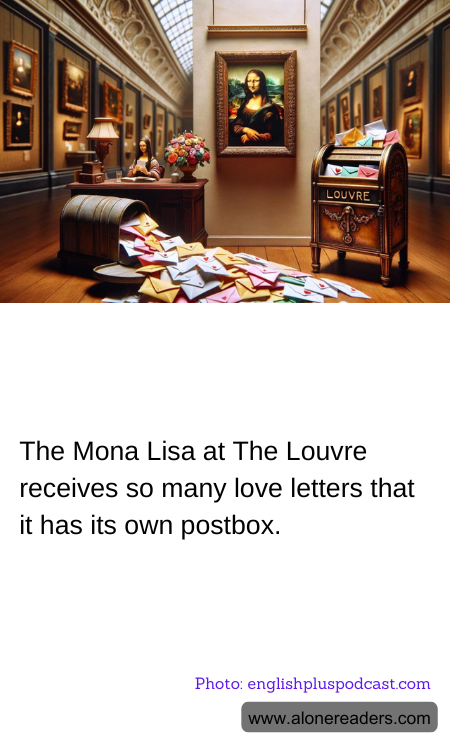
The Mona Lisa, Leonardo da Vinci's masterpiece, remains one of the most famous paintings in the world, housed in the Louvre Museum in Paris. Its allure extends far beyond its artistic merit, captivating the hearts of millions of visitors each year. Interestingly, this iconic piece of art has become not just a subject of admiration but also of affection, receiving countless love letters from admirers around the globe. The volume of these amorous notes has led the Louvre to provide a special postbox dedicated solely to correspondence for the Mona Lisa.
This phenomenon of sending love letters to an inanimate object like a painting underscores the profound emotional connection that art can evoke. The letters vary from expressions of admiration for Da Vinci’s work to personal confessions and declarations of love directed towards Mona Lisa herself, as if she were capable of reciprocity. This connection might be attributed to her enigmatic smile that has intrigued art lovers for centuries, projecting an aura of mystery and a persona that feels almost real.
The existence of a postbox for the Mona Lisa symbolizes the unique relationship between art and viewer, a testament to the way artistic expressions transcend visual boundaries to evoke deep emotional responses. For many, writing to the Mona Lisa is a way of engaging in a silent dialogue with the past, with Da Vinci, and with the essence of beauty and artistry itself. It highlights how art is not just seen but felt, and how it continues to inspire and evoke passion, moving people to reach out in such a personal and intimate manner.
The Louvre, recognizing the unique place the Mona Lisa holds in the hearts of its visitors, handles these letters with a level of care that honors the emotional weight they carry. While the museum has not disclosed the exact nature or content of the letters, the fact that they are preserved in such a thoughtful manner speaks to the reverence and mystique that surrounds this iconic painting. Each letter adds another layer to the story of Mona Lisa, each one a tribute to the lasting impact of Da Vinci’s work on personal lives and emotions across centuries and geographies.
