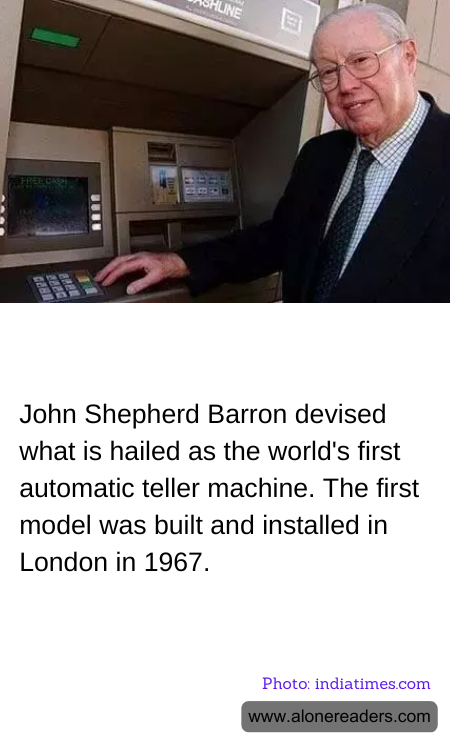
In the evolving narrative of modern banking, one of the most pivotal innovations is the automatic teller machine (ATM), attributed to John Shepherd Barron. The idea struck Barron while he was soaking in a bathtub, pondering a way to access his money outside the restrictive banking hours. This moment of inspiration led to the development of a device that could mechanically dispense cash to customers at any time, altering the canvas of banking transactions worldwide.
The first ATM was installed on June 27, 1967, at a branch of Barclays Bank in Enfield, London, significantly simplifying banking procedures. This original machine operated quite differently from the ATMs we are accustomed to today; it used radioactive checks, specifically carbon-14, to verify the identity of the user and dispense a maximum of £10 at a time—a modest amount, yet a revolutionary step towards today's cash withdrawal practices.
The introduction of the ATM machine did not only mark a technological triumph but also heralded a new era in personal banking. People no longer had to align their schedules with the limited opening hours of banks or contend with long queues to perform basic financial transactions. The innovation brought forward by Barron's ATM concept has since evolved, with enhancements including PIN technology, graphical interfaces, and numerous functionalities beyond cash withdrawals, such as deposits, fund transfers, and bill payments, making it a cornerstone of modern-day banking convenience.
By transforming the banking experience to a 24/7 service, the ATM helped globalize banking standards, fostering more nuanced technological advances in the financial sector. This technological leap led to greater flexibility in personal finance management, catalyzing further advancements in digital banking, online transactions, and financial autonomy. Thus, from a simple concept developed over half a century ago, ATMs continue to stand as a testament to the ingenuity of John Shepherd Barron and a symbol of continuous innovation in the face of static convention.
