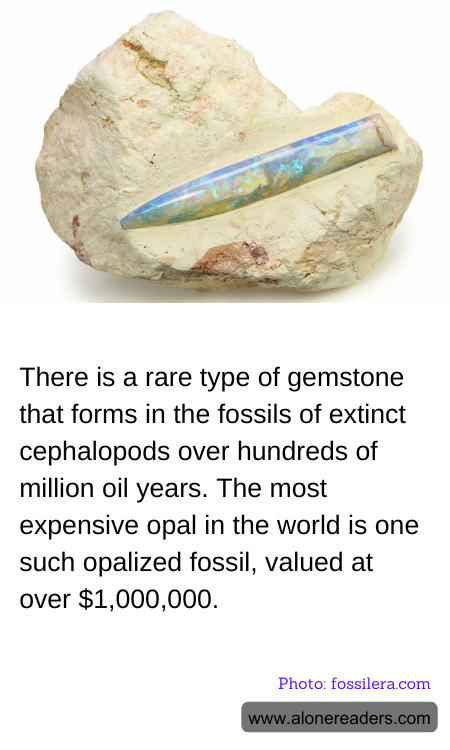
In the mesmerizing world of gemstones, opal stands out for its vibrant play of colors and enchanting patterns. Among these, a particularly rare and fascinating category exists – opalized fossils of extinct cephalopods. These fossils undergo a remarkable transformation over millions of years as silica gradually replaces the organic material, culminating in the creation of opal. These gemstones are not only a wonder of natural art but also a window into prehistoric life, making them highly prized among collectors and enthusiasts.
One of the most illustrious examples of opalized fossils is an extinct cephalopod fossil that has been turned into opal, valued at a staggering $1,000,000. This fossil captures an ancient marine creature, likely an ammonite, which thrived in the oceans hundreds of millions of years ago before becoming extinct along with the dinosaurs. The fossilized remains have been naturally infused with silica-rich fluids over geological time scales, ultimately transforming into opals displaying a spectacular array of colors.
This transformation occurs under very specific conditions when the waters, saturated with silica, percolate through sediments, filling the cavities and cracks of the dead organisms. As the water evaporates, it leaves behind a silica deposit that gradually hardens into precious opal. The unique conditions necessary for the formation of such opals mean that each piece is unique, encapsulating its own distinct story and visual appeal.
The allure of these opalized fossils extends beyond their beauty. They are tangible connections to the distant past, often providing insights into the environments where they were formed and the organisms they encapsulate. For collectors, owning an opalized fossil is akin to holding a piece of Earth's ancient history. Moreover, the rarity and the intricate process of formation contribute to the high valuation of these gemstones. The opalized cephalopod being worth over $1,000,000 underscores its rarity and the high demand among collectors and investors alike.
The value and fascination with gemstones like opalized fossils highlight the extraordinary intersection between natural history and gemology. Each piece not only adds aesthetic value but also serves as an educational and scientific artifact, making them highly sought after in various fields, from jewelry making to paleontological studies. Thus, opalized fossils exemplify one of the many marvels of our planet, blending beauty with the mysteries of the natural world.
