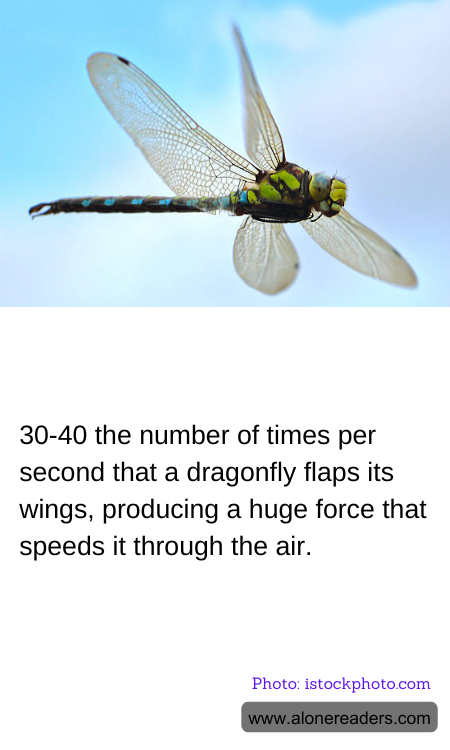
Dragonflies are among the most spectacular aerialists in the animal kingdom, often zipping through the air at remarkable speeds, thanks to their incredible wing-flapping capabilities. Typically, a dragonfly flaps its wings about 30 to 40 times per second. This rapid flapping generates a significant amount of force, propelling the insect through the air with both speed and precision.
The wings of a dragonfly are marvels of natural engineering. Unlike many other insects, dragonflies have the unique ability to maneuver each of their four wings independently. This allows them to change direction swiftly, hover in place, and even fly backward, making them formidable hunters. The high speed of their wing beats contributes to these complex flight patterns and enables them to catch prey or escape from predators quickly.
Moreover, the structure of dragonfly wings contributes to their aerodynamic abilities. The wings are shaped and veined in a way that maximizes lift and minimizes drag, allowing for efficient flight dynamics. The muscles that control the wings are highly specialized and powerful, further augmenting their flight capabilities.
Dragonflies are often observed near bodies of water, as their larvae, known as nymphs, are aquatic. Adults typically hunt for other insects, using their exceptional speed and agility to capture mosquitoes, flies, and other small insects. Their predatory skills are not just a spectacle of nature but also crucial for controlling populations of nuisance insects, which can carry diseases.
This extraordinary wing-flapping efficiency also has implications for biomimicry in science and engineering, where the principles of dragonfly flight are studied to inspire innovations in technology, particularly in the fields of robotics and aerodynamics. The ability to replicate the agility and efficiency of dragonfly flight could lead to advances in drone technology, improving maneuverability and energy efficiency.
Overall, dragonflies provide an excellent example of natural selection fine-tuning organisms to fit their roles in the ecosystem perfectly, combining mechanical precision with energetic efficiency to dominate their aerial environment.
