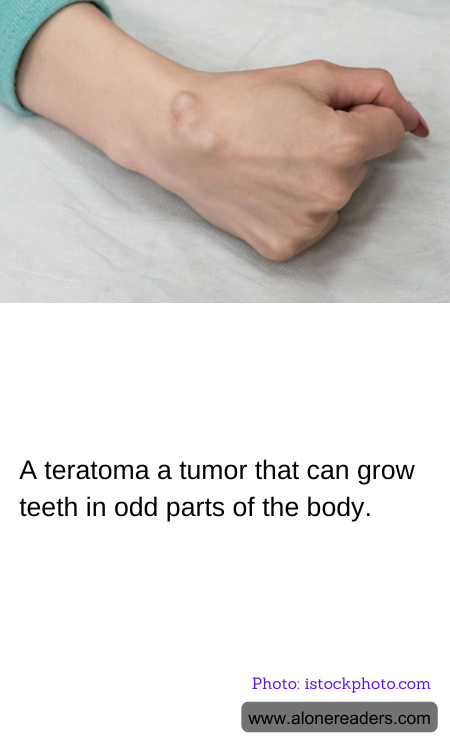
Teratomas are indeed fascinating and somewhat unsettling because they contain tissues that are drastically out of place. These tumors are characterized by having components from more than one of the three primary germ layers: ectoderm, mesoderm, and endoderm. What sets teratomas apart, particularly, is their ability to form structures such as hair, muscle, bone, and even more complex features like teeth. This capability stems from the pluripotent nature of the cells that make up the tumor, which, like stem cells, have the potential to differentiate into various types of tissue.
The formation of teeth within teratomas, although rare and peculiar, is a documented phenomenon. These tumors can occur virtually anywhere in the body but are most commonly found in the ovaries, testicles, and tailbone area. In cases where teratomas develop in the ovaries or testicles, they are typically benign. However, when these tumors occur in other locations, such as the brain or mediastinum (the area between the lungs), complications can be more severe, and the potential for malignancy increases.
The presence of fully formed teeth in a teratoma is a striking example of the tumor's ability to develop organized, complex structures. These teeth are often surrounded by other tissue types that mimic normal organ structures, leading to mixed, or dermoid, cysts. The teeth within a teratoma are not functional but are eerily reminiscent of normal teeth in appearance and structure.
The exact cause of teratomas remains a subject of medical research, though they are believed to originate from germ cells, which are cells meant to contribute to the reproductive system and thus have the inherent capacity to develop into all sorts of human tissue. In some theories, teratomas arise due to errors during the development of these germ cells, leading them to become confused about where and how they are supposed to develop.
Not only are these tumors of high interest in the context of medical pathology and surgery, but they also provide significant insights into developmental biology and the possibilities (and limits) of cell differentiation. For patients diagnosed with teratomas, treatment generally involves surgical removal, particularly if there is a risk of malignancy or if the tumor causes painful symptoms or other complications. Post-surgical prognosis is usually good, especially if the teratoma is benign and completely resected, though regular follow-ups are essential to monitor for recurrence. The intriguing nature of teratomas highlights the complexity of human biology and reminds us of the intricate balance required in cellular development and differentiation.
