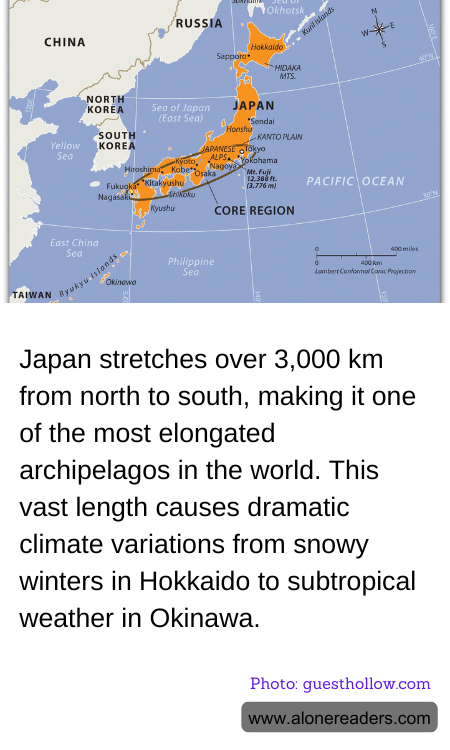
Japan, an elongated archipelago, spans more than 3,000 kilometers from its northernmost point in Hokkaido to the southern extremities of Okinawa. This remarkable geographical stretch results in a striking diversity of climates across the country. In the north, Hokkaido experiences harsh, snowy winters that transform its landscape into a winter wonderland, attracting ski enthusiasts from around the globe. The cold climate is ideal for winter sports and also impacts local agriculture, favoring crops that can thrive in cooler temperatures.
As one travels southwards, the climate undergoes a gradual transformation. Honshu, the largest island of Japan, showcases a more temperate climate with distinct seasons. The famous cherry blossoms of spring, warm and humid summers, pleasant autumns, and moderately cold winters define this region. Cities like Tokyo and Kyoto experience this varied climate, which influences everything from culinary traditions to the architecture, as buildings are designed to accommodate heavy rainfalls and the occasional typhoon.
Further south, the climate shifts again as one reaches Shikoku and Kyushu, where the weather becomes milder, allowing for an extended growing season. The region is known for its lush landscapes and hot springs, a direct benefit of its volcanic activity and warmer climate.
The southernmost islands of Okinawa are in stark contrast to the icy north. Here, a subtropical climate prevails, characterized by mild winters and hot, humid summers. The region is famous for its beautiful coral reefs, mangrove forests, and abundant marine life, making it a popular destination for snorkeling and diving. This climate supports a unique ecosystem and cultural lifestyle distinct from the rest of Japan, with an emphasis on outdoor activities and a diet heavily influenced by the bountiful sea.
This climatic variation across Japan not only defines the natural beauty and biodiversity of each region but also deeply influences the culture, food, and lifestyle of its people. From the snow festivals of Hokkaido to the tropical beaches of Okinawa, Japan offers a rich and varied experience that changes dramatically over relatively short distances, shaping a country that is as diverse as it is unified.
