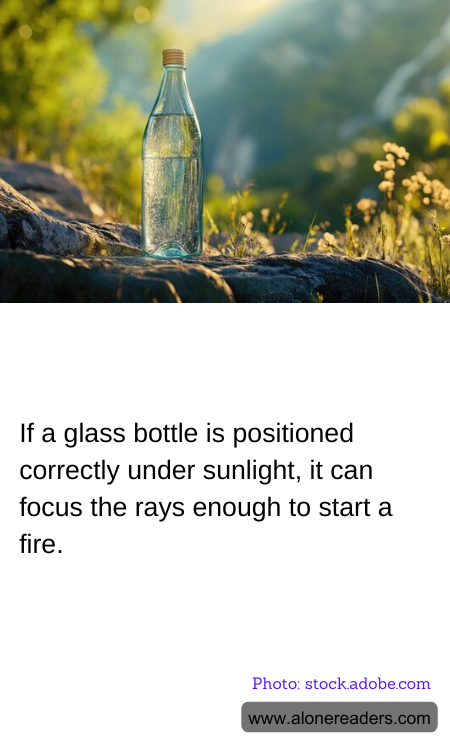
The intriguing phenomenon of a glass bottle igniting a fire under the right conditions is a classic example of the optical properties of glass and the power of sunlight. This phenomenon is rooted in the principles of physics, specifically focusing on the behavior of light as it passes through different mediums.
Glass bottles are typically made from transparent materials like silica that allow light to pass through. When sunlight, which contains all colors of light, strikes the curved surface of a glass bottle, the bottle acts similarly to a lens. The shape of the glass can converge or focus the sun's rays to a single point. At this focal point, the light intensity is significantly magnified.
For a fire to start, the focused light must fall on a combustible material, like dry leaves, paper, or small twigs. The concentrated energy at the focal point increases the temperature of this material. If the temperature rises above the material's ignition point, and the conditions are right (adequate oxygen supply and dry enough material), the concentrated light can cause the material to catch fire.
The effectiveness of a glass bottle in starting a fire depends on several factors. The curvature and thickness of the glass influence how sharply it can focus the light. Additionally, the clarity of the glass and the angle at which sunlight enters are also crucial. Sunlight must enter at an angle conducive to focusing the light sharply on the combustible material. This usually occurs when the sun is at its peak, around midday, when the sun's rays are most direct.
Using a glass bottle to start a fire is not just a demonstration of a simple physical principle; it also serves as a warning about the potential fire hazard in improperly disposing of glass objects. Ensured by environmental and safety perspectives, disposing of glass materials in areas that receive strong sunlight, such as in grassy or wooded outdoor areas, can inadvertently lead to fires. This risk underscores the importance of responsible waste management and environmental awareness.
Overall, the ability of a glass bottle to start a fire serves as a fascinating example of the interplay between natural forces and everyday materials, illustrating both the wonders of physical science and the practical implications they can have in terms of safety and environmental health.
