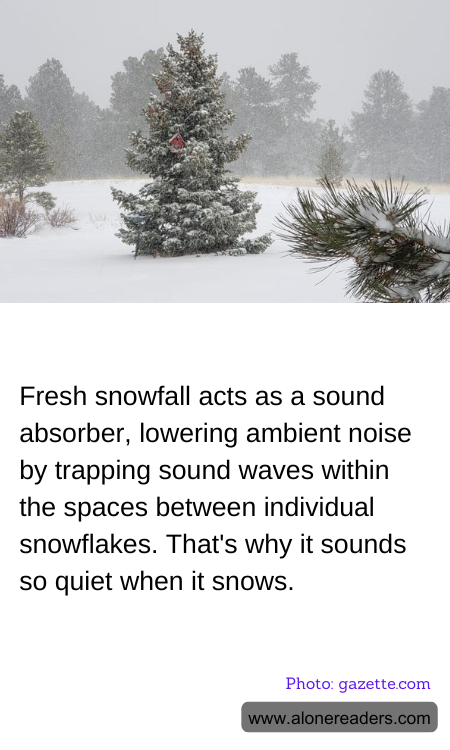
When a fresh blanket of snow covers the landscape, a noticeable quiet descends, a natural phenomena that goes beyond the mere absence of usual human activities. Fresh snow acts as a sound absorber, significantly reducing the ambient noise level in the environment. This acoustical effect is mainly due to the structure and properties of newly fallen snow.
The snowflakes that make up a fresh snowfall are not tightly packed. Instead, they form a loose, porous layer of snow. The spaces between these snowflakes play a crucial role in trapping sound waves. As sound travels through the air and into the layer of snow, it passes through the tiny spaces between the flakes. This causes the sound waves to lose energy and scatter, which diminishes their strength and the distance they can travel. The porous nature of fresh snow serves as an insulative barrier against sound, absorbing vibrations that would otherwise travel more freely through hard surfaces like concrete or bare ground.
Additionally, snow absorbs higher frequency sounds better than lower frequency sounds, which contributes to the peculiar stillness experienced after a snowfall. The higher frequencies are typically associated with the sharpness and definition in sounds, so their absorption leads to a muffled, subdued acoustic environment. This effect is particularly pronounced during a steady snowfall, as the continuous accumulation of fresh snow keeps renewing this layer of natural sound insulation.
The phenomenon doesn't last indefinitely; as the snow settles and begins to melt, or compacts under its own weight or that of footprints and vehicles, it loses many of its sound-absorbing properties. The structure changes from a soft, fluffy composition to a harder, denser one, making it less effective at trapping sound. Thus, the exceptional hush that accompanies a snowstorm is a fleeting, delicate state reliant not only on the quantity of snow but also on its freshness and structure.
Understanding these dynamics adds depth to our appreciation of quiet winter landscapes, not just as picturesque scenes, but as rare acoustic environments crafted by the intricate interplay of weather and physics. The next time snow falls, stepping outside into the serene silence can be a moment of profound calm and sensory reduction, a gentle reminder of nature’s capacity to quietly transform our surroundings.
