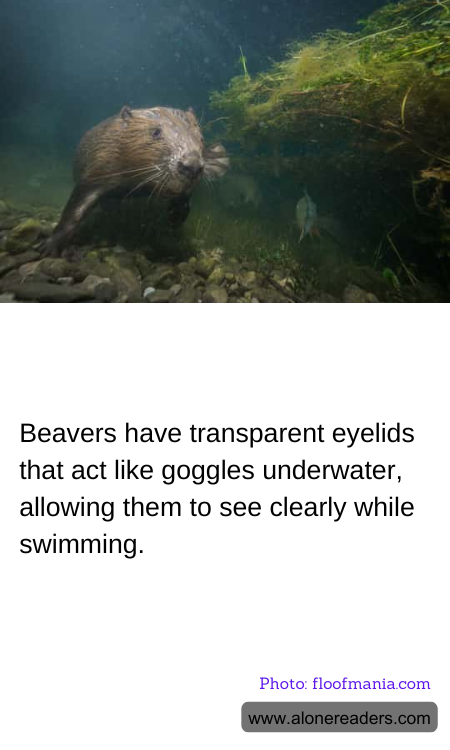
Beavers, those industrious creatures known for their dam-building, possess a unique adaptation that enables them to see underwater. Their transparent eyelids function essentially like natural goggles, allowing them to have clear vision while they swim. These specialized eyelids are a form of nictitating membrane, which is common among various species of birds and aquatic animals but serves a particularly vital role in beaver biology.
The transparent eyelids help beavers in several key aspects of their lifestyle. Firstly, they protect the beaver’s eyes from debris and other potentially harmful substances in the water. This is crucial for an animal that spends a significant amount of time submerged in often murky and vegetative waterways. Simultaneously, these eyelids keep their eyes moist and prevent them from drying out underwater, ensuring that beavers can stay submerged for long periods if necessary.
Moreover, this adaptation is vital for beavers as they engage in various underwater activities, including the construction and maintenance of dams and lodges, foraging for food, and escaping from predators. Seeing clearly underwater enhances their ability to navigate, manipulate objects, and interact with their environment effectively, which is essential for their survival.
The ability of beavers to maintain such clarity of vision underwater is just one of many examples of nature’s ingenuity. It underscores the beaver's evolutionary adaptations to a semi-aquatic lifestyle, optimizing their abilities to thrive in both land and water environments. Thus, these “natural goggles” not only highlight the complexity of beaver biology but also underscore the intricate ways in which animals adapt to their habitats, enhancing their ability to survive and prosper in diverse ecological niches.
