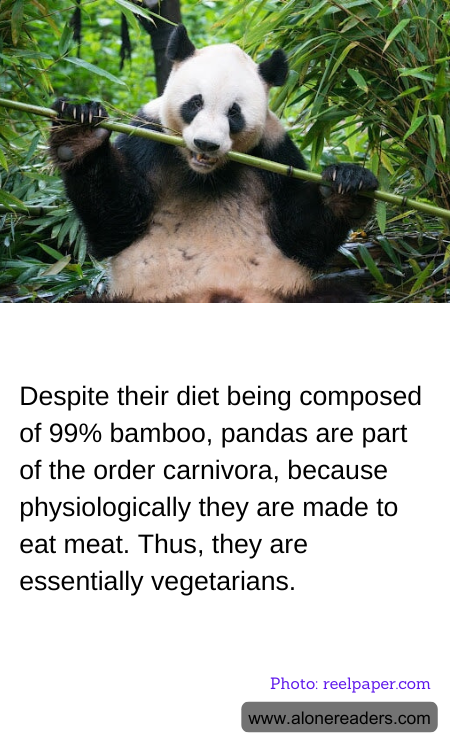
Giant pandas are one of nature's most intriguing contradictions. Despite belonging to the order Carnivora, these endearing creatures have a diet that is almost exclusively herbivorous, composed predominantly of bamboo. This diet is quite unusual, considering their digestive system is more suited to processing meat, thus classifying them biologically closer to carnivores.
This physiological setup includes a simple stomach and a short small intestine, typical traits in carnivorous animals meant to digest protein and fat efficiently. However, a giant panda's diet is dramatically different, as bamboo provides minimal protein and a high amount of fiber, which their bodies are not optimized to break down effectively. This dietary choice is a significant reason why pandas must consume a vast amount of bamboo daily, ranging between 20 to 40 pounds, to meet their energy and nutritional needs.
Their shift away from meat might be evolutionary, linked to their need to adapt to their environment. Although pandas are capable of eating meat and occasionally do consume small animals, eggs, or carrion, their diet is predominantly bamboo due to its abundance in their natural habitats. The availability of bamboo allows them to survive without competing with other local carnivores whose dietary needs focus more directly on meat.
Pandas possess a pseudo-thumb, a modified wrist bone, which allows them to hold and manipulate bamboo efficiently, showing how they have evolved anatomically to support their unique dietary habits. This adaptation is indicative of how species can undergo significant evolutionary changes spurred by environmental necessities. While pandas retain the digestive system of a carnivore, their diet and behavior exhibit a remarkable example of how animal diets can evolve and adapt to local resources, even if it means straying from their physiological design.
In essence, though genetically and physiologically designed as carnivores, the giant pandas' bamboo-based diet and evolution present a fascinating blend of nature's adaptability and the complex interplay between an animal's natural history and its environment.
