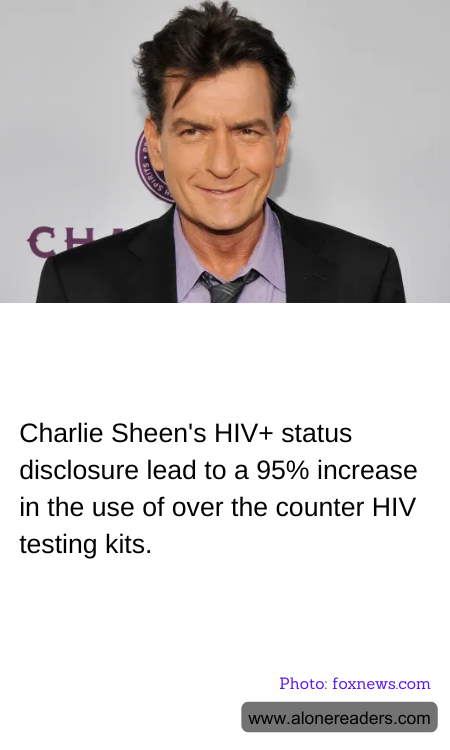
When Charlie Sheen publicly disclosed his HIV-positive status in November 2015, it created a significant media event that had far-reaching effects on public health behavior. The announcement was not only headline-grabbing but also served as a pivotal moment for raising awareness about HIV and AIDS. Following his disclosure, there was a marked increase in the engagement of the public with HIV-related health actions, notably in the use of over-the-counter HIV testing kits.
Research indicates that there was a surge of up to 95% in the sales of these kits immediately after Sheen's revelation. This phenomenon, often referred to as the “Charlie Sheen Effect,” highlights the substantial influence public figures can have on health awareness and behavior. The spike in HIV test kit sales demonstrates how celebrity health disclosures can play a crucial role in reducing the stigma associated with certain medical conditions and encourage essential health-seeking behaviors among the public.
The increase in self-testing likely helped many individuals learn about their HIV status in a private manner, potentially leading to earlier health interventions and reducing the spread of the virus. Public health experts believe that such increases in self-testing are vital in the fight against HIV/AIDS, as early detection and treatment can significantly improve health outcomes and decrease the likelihood of transmitting the virus to others.
Sheen’s disclosure and its aftermath underscore an important public health message: increased awareness can lead to increased action. This event shows that when celebrities talk openly about their health challenges, it can catalyze widespread public health benefits, illustrating a powerful intersection between celebrity influence and public health advocacy.
