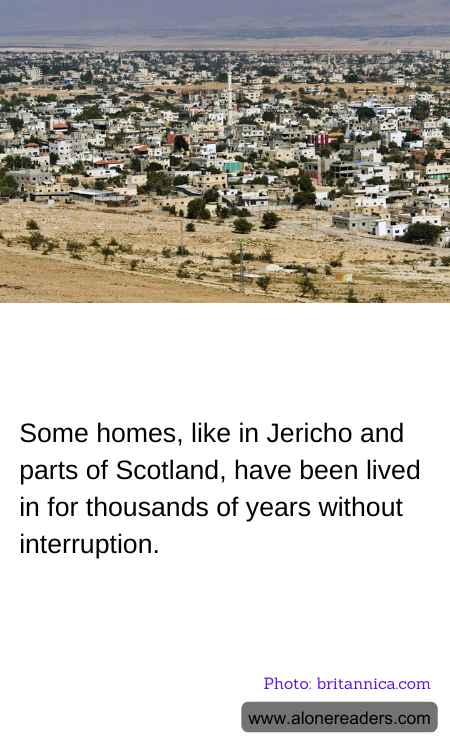
Imagine a home that has stood the test of time, sheltered countless generations, and resonated with the echoes of millennia—some homes, notably in places like Jericho and parts of Scotland, hold such a unique distinction. They stand not only as residential structures but also as profound symbols of human continuity and resilience. The ancient city of Jericho, often cited as one of the oldest continuously inhabited sites in the world, offers archaeological evidence suggesting that it has been occupied for more than 11,000 years. This longevity provides a fascinating glimpse into human settlement and social evolution over the ages.
Similarly, in Scotland, parts of the landscape are marked by homes that have seen continuous habitation for centuries. These residences are steeped in history, reflecting architectural adaptations and the shifting needs and fortunes of their occupants over time. The significance of these long-inhabited homes extends beyond their structural and historical aspects; they embody living traditions, maintaining cultural and familial legacies that are passed down through generations. Such homes often remain within families for many generations, each new layer adding to the rich tapestry of its history.
The reasons for such uninterrupted habitation are manifold. In many cases, the geographic locations of these homes have offered strategic advantages, such as protection from invaders or natural disasters, fertile land, or proximity to water sources. Over time, these geographic benefits helped communities thrive, ensuring that homes continued to be occupied and maintained. Additionally, the sentimental value and the cultural significance of familial continuity often contribute to these homes being preserved and inhabited through generations.
In a world where modern construction often overlooks the past in the pursuit of the new, these ancient homes serve as a reminder of our connection to those who came before us. They challenge the impermanence of modern lifestyles and highlight the deep human need for connection to place and history. As living museums, they offer not just a window into the past but also lessons in sustainability and adaptation, showing how homes can be maintained and cherished through careful preservation and respect for tradition. This enduring inhabitance not only enriches our understanding of human history but also inspires a sense of reverence and responsibility toward the preservation of such irreplaceable cultural heritage.
