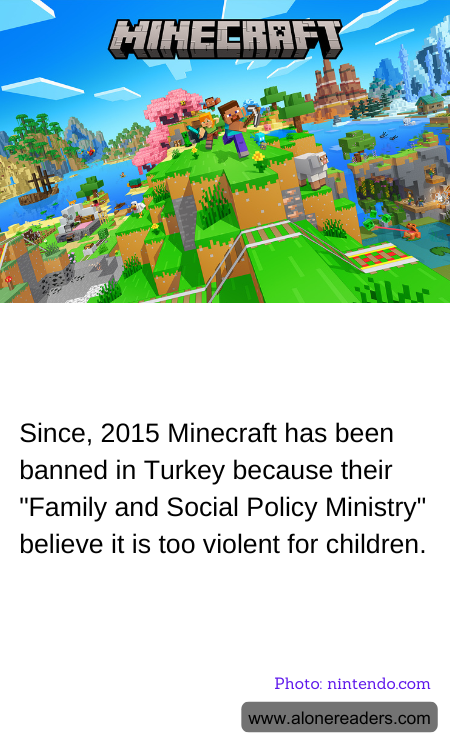
Minecraft, a popular sandbox video game developed by Mojang Studios, has garnered immense popularity worldwide due to its creative and building aspects, which allow players to construct out of textured cubes in a 3D procedurally generated world. Despite its positive reception and various educational uses, in 2015, the game faced scrutiny and was subsequently banned in Turkey.
The Turkish Family and Social Policy Ministry spearheaded an investigation into Minecraft after concerns were raised about the game's content, particularly focusing on its survival mode where players must fend off dangerous creatures. The ministry’s perspective was that such features could promote aggression and solitary play. Moreover, it emphasized the potential harm to children in terms of social isolation and confusion between the real world and the game’s pixelated environment.
This decision brought about substantial debate regarding the balance between protecting children from exposure to what could be considered violent content and stifling creative freedom and educational potential in digital games. Critics argued that the decision to ban Minecraft was an overreach, highlighting the game's use in educational settings across the globe, including in subjects like mathematics, history, and computer programming. They pointed out that, unlike many video games, Minecraft offers a 'Peaceful' mode, which eliminates hostile creatures and focuses entirely on creativity and building.
Moreover, the potential of Minecraft as a tool for learning and development was overshadowed by the concerns of the Turkish ministry. The game encourages skills such as problem-solving, spatial reasoning, resource management, and teamwork, particularly in its collaborative multiplayer mode.
As of now, the ban illustrates the ongoing global debate about the influence of video games on youth and draws attention to the need for critical evaluation rather than outright prohibition. Each country's approach to this balance varies widely, reflecting broader cultural attitudes towards digital media and its impact on society. In Turkey, the prohibition of Minecraft stands as a testament to the complexities surrounding modern media consumption among younger audiences, prompting a dialogue about how best to shield children from potential harm while enabling access to the educational and social benefits that modern video games can offer.
