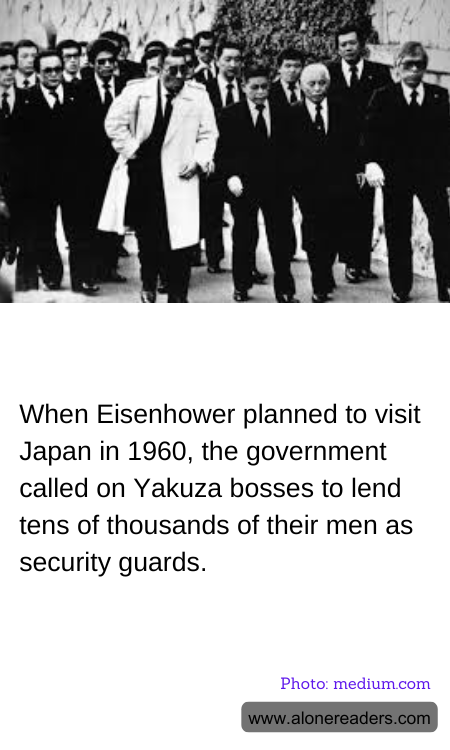
In the complex landscape of post-war Japan, the intertwining of organized crime, politics, and security showed its most intriguing face during the planned visit of President Dwight D. Eisenhower in 1960. This visit was part of a goodwill tour across Asia to bolster U.S.-Asian relations amid the Cold War tensions and to confirm the newly signed U.S.-Japan Security Treaty. The anticipation of this visit underscored the unique position the yakuza held in Japanese society at the time.
The Japanese government, apprehensive about potential protests and the general security for this high-profile visit, took an unusual step. It covertly approached several yakuza bosses to help maintain order during the visit. The yakuza, a potent force in Japanese society known both for criminal activities and their complex relationship with political and economic spheres, were seen by some as capable of mobilizing quickly and managing large groups through their hierarchical structures. Their involvement was proposed under the guise of ensuring that protests did not escalate into violence and that the event proceeded smoothly.
The plan called for tens of thousands of yakuza members to act as a kind of informal security force. The yakuza's potential role in this context was seen as a pragmatic use of their organizational skills and manpower, albeit controversial given their notorious background. This move was reflective of the blurred lines between legitimate governance and organized crime, a phenomenon not uncommon in various parts of the world where the state sometimes engages with criminal elements to maintain order or address issues seemingly beyond its control.
However, the visit never happened. Widespread protests against the security treaty and the U.S. presence in Japan escalated, culminating in the cancellation of Eisenhower's trip. This marked a significant moment in Japanese political history, highlighting the deep divisions within the country about its post-war future and its relationship with the United States. The involvement of the yakuza in the security arrangements, though largely kept from public view, was a testament to the complex socio-political fabric of Japan at the time.
Reflecting on this episode offers insights into the governance challenges faced by Japan in a period of intense transformation and the often-marginalized narratives involving non-state actors like the yakuza in statecraft and public security. This chapter of history serves as a peculiar example of the lengths to which governments might go to secure their objectives, navigating the murky waters of ethics and pragmatism.
