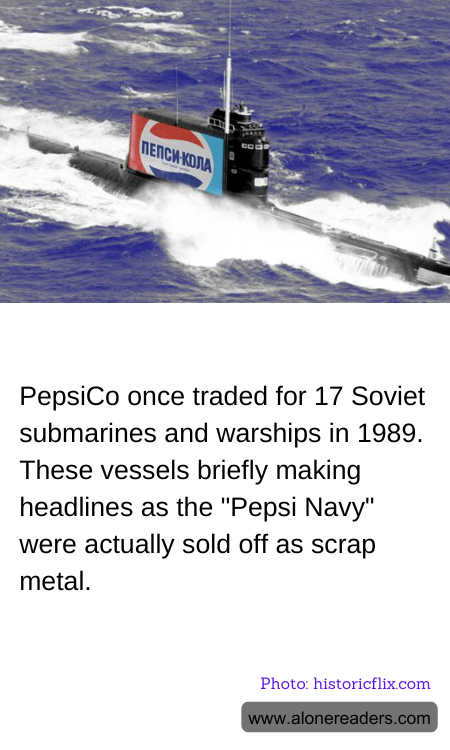
In one of the most unusual trades of the 20th century, PepsiCo found itself in possession of 17 Soviet submarines and warships in 1989. This bizarre twist of events stemmed from PepsiCo's longstanding involvement in the Soviet Union, which began in the late 1950s when it became the first Western product to be sold there. The relationship was deepened in 1972 when Pepsi signed a barter agreement with the Soviet Union: Pepsi syrup for Stolichnaya vodka. By 1989, this agreement had evolved into one of the most unique trade deals in history.
The collapse of the Soviet Union brought about unique opportunities and challenges, among them the conversion of a military economy to a peacetime commercial economy. Amidst this backdrop, PepsiCo negotiated a deal to trade its cola syrup for a fleet of Soviet submarines and warships, including a cruiser, a frigate, and a destroyer. This fleet humorously came to be known as the "Pepsi Navy."
However, PepsiCo did not intend to enter the military sector. The acquisition of the submarines and warships was purely for the purpose of resale. Understanding the impracticality and sheer absurdity of maintaining a private navy, PepsiCo quickly sold the vessels for scrap. The deal, although bizarre, was emblematic of the creative solutions businesses explored to navigate the complexities of international trade during that era.
Reflecting on the deal, PepsiCo's then CEO, Donald Kendall, humorously noted that at one point, PepsiCo had the sixth largest submarine fleet in the world. While the "Pepsi Navy" was short-lived and served no strategic or military purpose, it remains a remarkable anecdote of Cold War commerce, highlighting the lengths to which multinational companies would go to secure their place in global markets. The episode also underscores the dramatic shifts in geopolitical dynamics that characterized the late 20th century, where a soda company briefly became a maritime power.
