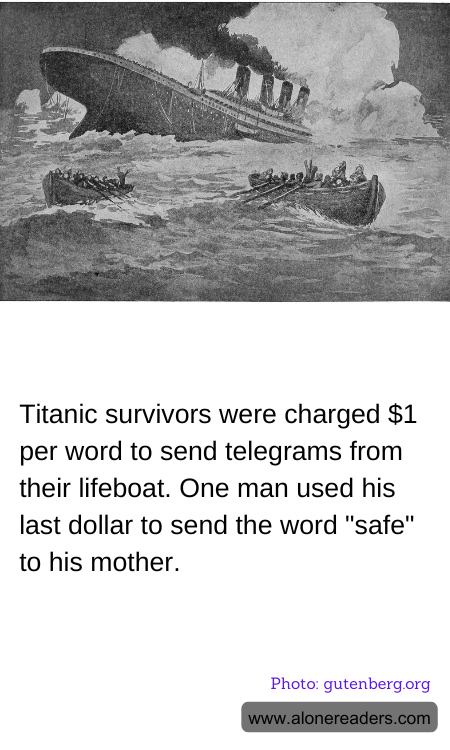
In the harrowing aftermath of the Titanic disaster on April 15, 1912, survivors found themselves aboard lifeboats in desperate conditions, seeking to inform their loved ones of their safety. Communication was limited and extremely valuable, leading to the imposition of a charge of $1 per word for sending telegrams from these small vessels. This scenario underscores the primitive and expensive nature of urgent communication in the early 20th century. Among the poignant stories from this tragedy is that of a man who, with his last remaining dollar, chose to send a single-word telegram: "safe." This word was directed to his mother, succinctly conveying his survival and current status amidst the uncertainty following one of the most infamous maritime disasters in history.
This act, though seemingly small, encapsulates the emotional and chaotic environment that the survivors had to navigate. Not only were they grappling with the immediate shock and grief over the accident and the loss of approximately 1,500 lives, but they were also facing the logistical challenges of communicating with the outside world from the middle of the Atlantic Ocean. The cost of sending messages was prohibitively high due to the technology of the time, which included Marconi's wireless telegraph system, a novel technology that was still not universally accessible or affordable.
The life-saving message of "safe" sent by the man also highlights the deep human aspect of the disaster. It reflects a universal need to reach out to loved ones in times of crisis, a gesture of reassurance that transcends any monetary value. This story is not just a historical footnote; it serves as a reminder of the resilience and enduring spirit of human connection in the face of overwhelming adversity. The simplicity of the message and the sacrifice made to send it tell a powerful story about priority, love, and the essence of human communication during disaster situations.
