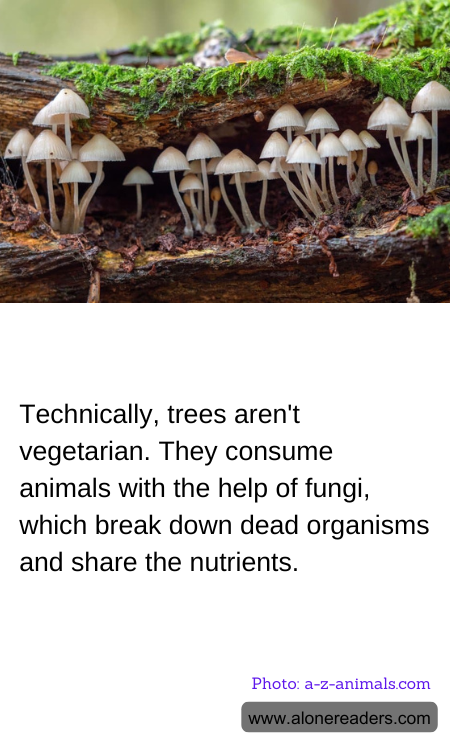
While trees are often thought of as the quintessential image of vegetarianism in nature, their relationship with the surrounding ecosystem reveals a more complex web of nutrient exchange that includes the consumption of animal matter. This intriguing aspect of trees' nutritional habits involves a symbiotic partnership with fungi, specifically mycorrhizal fungi, which form associations with tree roots. These fungi extend far beyond the tree's own root system, effectively increasing the root surface area and enhancing the tree's ability to absorb water and nutrients.
Mycorrhizal fungi are adept at breaking down organic matter in the soil, which includes dead insects, animals, and other forms of detritus. As these fungi decompose organic material, they release nutrients that are otherwise locked within the biological matter. Crucially, the fungi then transport some of these nutrients, including nitrogen and phosphorus, back to the tree. In exchange, the tree provides the fungi with carbohydrates produced through photosynthesis. This mutualistic relationship is essential not only for the survival of both organisms but also adds an interesting dimension to our understanding of what trees 'consume'.
The notion that trees indirectly 'eat' meat by absorbing nutrients released from decomposed animal remains challenges the simplistic view of trees as purely vegetarian organisms. It highlights the complexity of ecological interactions and the fact that nature often does not adhere neatly to the categories we create. Thus, while trees do not directly ingest or digest animal organisms in the manner animals do, they are part of a nutrient cycle that includes consumption of materials derived from animals.
Additionally, some trees are directly involved in carnivorous activities, such as the pitcher plant tree found in Borneo, which supplements its nutrient intake with insects that fall into its pitcher-shaped leaves. Although such instances are rare and not representative of most tree species, they further illustrate the diverse strategies trees employ to meet their nutritional needs.
Overall, the way trees interact with fungi and other aspects of their ecosystem exemplifies the intricate and interconnected nature of biological environments. It serves as a reminder of the complexity of plant life and their roles in broader ecological contexts, expanding our understanding of what it means to consume and recycle life.
