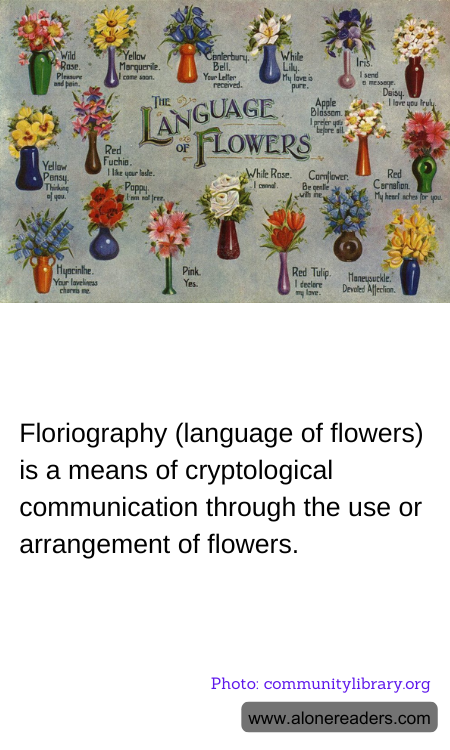
Floriography, often referred to as the language of flowers, is a fascinating form of communication that has been utilized for centuries. This cryptological form of expression uses flowers and floral arrangements to convey messages, allowing people to express feelings that might otherwise be unsaid. Each flower and sometimes even their colors carry their unique symbolism and meaning, making it possible to create intricate messages simply by choosing specific blooms.
The origins of floriography can be traced back to the highly codified court life of the Victorian era, where openness in conversation was often discouraged. As a means of discreet communication, individuals turned to flowers to convey secret messages. For example, red roses became associated with love and passion, while lilies often symbolized purity and sweetness. Different cultures also developed their unique interpretations of floriography, broadening and enriching the language throughout the ages.
Over time, comprehensive flower dictionaries were developed to help people decode the messages contained in bouquets. These guides were especially popular in the 19th century, where exchanging floral bouquets called "tussie-mussies" became a common practice. These small bouquets were not only gifts but also hidden letters, with each chosen stem delivering a part of a larger message. Due to the many possible meanings attributed to the same flower, the interpretation of these floral arrangements often depended significantly on local traditions and the context in which they were given.
Despite a decline in popularity with the advent of more direct forms of communication, floriography still finds relevance today, especially in moments where words are inadequate or when a touch of mystery and romance is desired. Modern florists and wedding planners often consider flower meanings when designing arrangements, adhering to the traditional sentiments. Additionally, enthusiasts of historical and cultural traditions continue to keep the language of flowers alive, celebrating its rich heritage through books, artwork, and themed events.
Floriography thus remains a testament to the human desire for nuanced and symbolic communication, reminding us of the days when a single flower could speak volumes and a bouquet could tell an entire story, all without speaking a word. It underscores the continuing significance of nature in human expression and the deep-rooted need for creativity in personal communications. Whether it is through a simple rose or an elaborate floral display, the language of flowers offers a unique and beautiful way to convey deep feelings and messages across cultures and generations.
