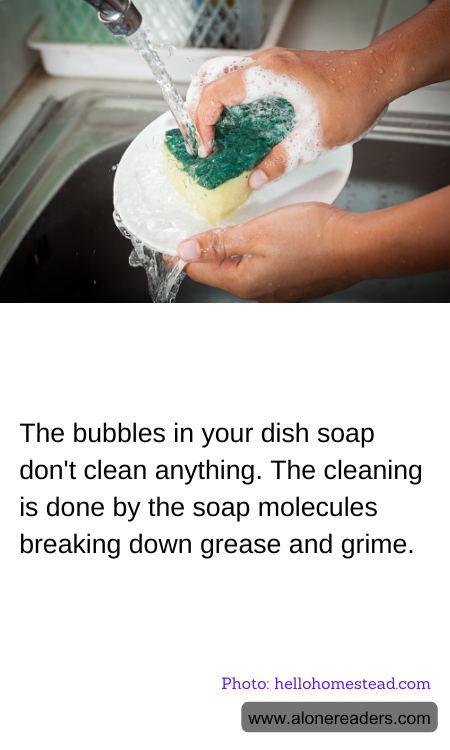
Bubbles in dish soap are more than just a visual cue that cleaning is happening; they are part of a misunderstanding about how cleaning takes place. Many believe that more bubbles mean better cleaning power, but the reality is more complex. The bubbles themselves don't actually contribute to the cleaning process. Instead, the real cleaning power of dish soap comes from its chemical composition.
Dish soap is primarily made of surfactants which have molecules that are attracted to water on one end and oil on the other. When dish soap is added to water and applied to dishes, these surfactants work to break down grease and grime. The water-attracting (hydrophilic) end of the surfactant molecule sticks to water, while the oil-attracting (hydrophobic) end sticks to grease and oils. This combination breaks the oils away from the dish surface, surrounding them in tiny clusters called micelles, which are then washed away with water.
The role of the bubbles, or suds, is often misunderstood. Bubbles are formed when air is trapped within the liquid structure of water and soap molecules. While they are a byproduct of the agitation and detergency process, they mainly serve as indicators that surfactants are present in the water and at work. However, they are not actually necessary for the cleaning process. In fact, some modern dish soaps and detergents are formulated to produce fewer bubbles but maintain or even enhance cleaning efficacy.
In practical use, excessive foam can actually impede the cleaning process by requiring more rinsing and potentially leaving behind soap residue. Manufacturers often add foaming agents to soaps not because they enhance cleaning power but because consumers associate bubbles with effectiveness.
Understanding this can help you choose more effective cleaning products and not just those that produce the most suds. This insight also emphasizes the importance of the active ingredients in dish soap rather than the visual feedback from bubbles. Hence, when choosing dish soap, it's beneficial to look at the types of surfactants used and their concentrations rather than the amount of lather the product produces.
