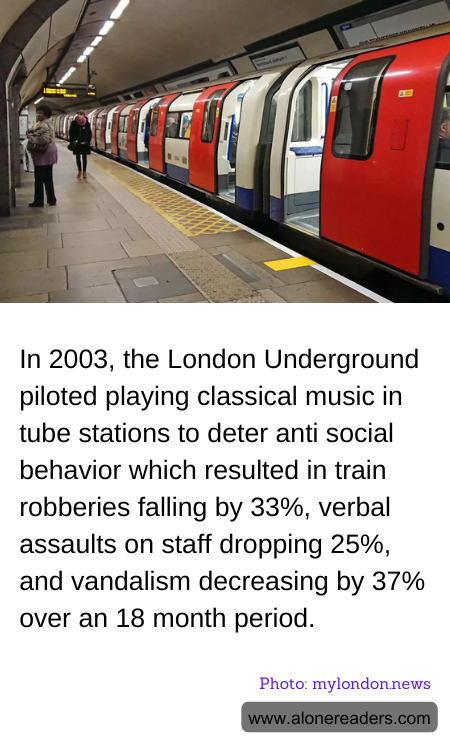
In an innovative approach to curbing anti-social behavior, London Underground implemented a pilot project in 2003 that involved playing classical music at select tube stations. This creative initiative aimed to create a calming atmosphere and deter potential wrongdoers, drawing on previous successful examples in other public spaces across the globe. Over the course of 18 months, the impact of this strategy was significant and measurable, showcasing the power of music beyond mere entertainment.
The results of this pilot were striking: train robberies plummeted by 33%, verbal assaults on staff were reduced by 25%, and incidents of vandalism saw a 37% decrease. These statistics highlighted not just a reduction in crime, but also suggested improvements in the overall environment of the tube stations. The choice of classical music, known for its soothing properties, was particularly poignant. It is thought that the music evoked a sense of tranquility and order, influencing the behavior of those within its hearing range.
The success of the experiment in London has opened discussions about the role environmental factors play in public safety. It also raises interesting questions about the psychological impact of music on human behavior, suggesting that it can play a strategic role in crime prevention and community wellbeing. Following London's lead, other transit systems worldwide began considering similar approaches, reflecting a growing recognition of innovative, non-invasive methods to enhance urban public spaces.
