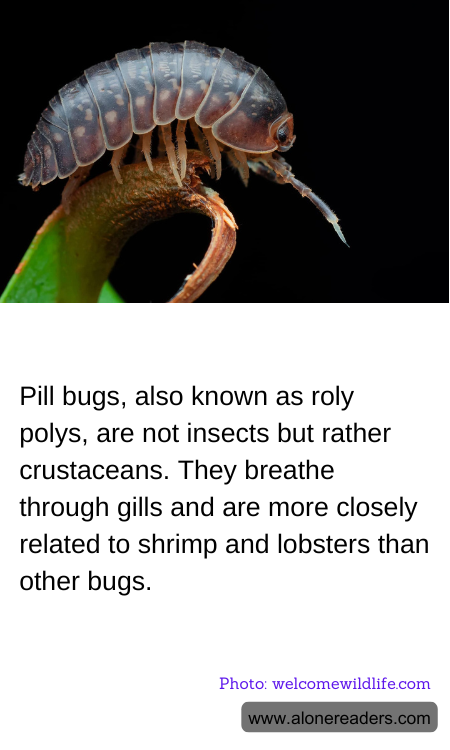
Pill bugs, commonly known as roly polys due to their ability to roll into a ball when threatened, are fascinating creatures that blur the lines of common categorization in the animal kingdom. Often mistaken for insects, these creatures are, in fact, terrestrial crustaceans. More closely related to shrimp and lobsters than to any terrestrial insect, pill bugs share a significant characteristic with their aquatic cousins: they breathe through gills.
Despite living on land, pill bugs require moist environments to thrive because their gills need to be wet to function effectively. This unique adaptation is why pill bugs are often found in damp locations like under rocks, in logs, or within piles of leaf litter. Their need for a humid environment makes them quintessential decomposers in the ecosystem, breaking down organic material and returning nutrients to the soil, showcasing how life cleverly adapts to various ecological niches.
Pill bugs have a rigid, segmented exoskeleton that they must periodically shed and regrow—a process called molting—as they grow. This exoskeleton provides protection from the terrestrial elements, which is vital since their aquatic relatives use the water as a shield. The ability of pill bugs to curl into a tight ball, a behavior known as conglobation, also serves as a defensive mechanism to protect their soft underparts from potential predators.
This blend of traits from aquatic and terrestrial life highlights the evolutionary journey of pill bugs. From their origins in the sea, these crustaceans have transitioned to life on land while retaining their ancestral traits, such as gill-breathing, which links them to their marine past. Their presence in your garden or under stones is a small reminder of the vast and intricate connections that thread through the tree of life, connecting seemingly disparate organisms through deep evolutionary time.
