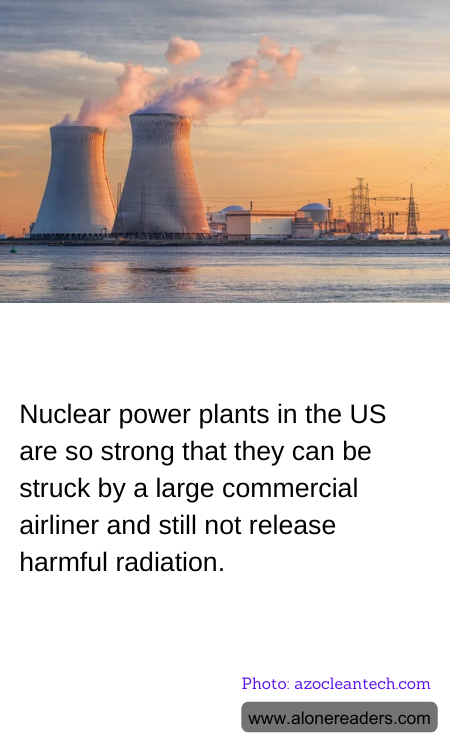
In the wake of the 9/11 attacks, concerns about the security and resilience of critical infrastructure, including nuclear power plants, have been at the forefront of national security priorities in the United States. Nuclear power plants are designed with robust safety measures and are among the most secure of industrial facilities in the country. Their design includes numerous safety systems and multiple physical barriers that are specifically engineered to protect the core and prevent the release of radioactive materials.
The structure that houses the reactor itself, known as the containment building, is constructed with reinforced concrete and steel. This structure is incredibly strong, designed to withstand severe natural disasters such as earthquakes and hurricanes, as well as potential man-made impacts. In fact, regulatory requirements ensure that these buildings can endure impacts equivalent to a large commercial airplane without breaching the containment. These standards were reviewed and increased following the 9/11 attacks, leading to even stricter regulations.
It is important to understand, however, that while nuclear plants are designed to be extremely tough, the scenario of a large airliner crash is complex. The Nuclear Regulatory Commission (NRC), along with other federal agencies, has conducted extensive studies and simulations to evaluate the potential impact of such an event. These studies generally conclude that while the external structures might be damaged, the primary containment structures, especially the steel-reinforced concrete that houses the reactors, would likely prevent any significant release of radiation.
Furthermore, nuclear facilities are not just passive structures. They are equipped with multiple active safety systems designed to shut down operations safely in the event of an accident or attack. Operators are trained extensively for emergency situations, including scenarios like an aircraft impact. Additionally, security at nuclear plants includes armed guards, secure perimeters, and surveillance systems designed to detect and respond to threats swiftly.
While no facility can be deemed completely impervulnerable, the combination of stringent regulatory oversight, sophisticated design requirements, rigorous construction standards, and comprehensive emergency preparedness practices are all geared towards ensuring that nuclear power plants in the U.S. remain safe and secure, capable of withstanding severe impacts without a catastrophic release of radioactive materials. These measures continually evolve as technology advances and new threats are assessed, ensuring ongoing protection against a range of potential incidents.
