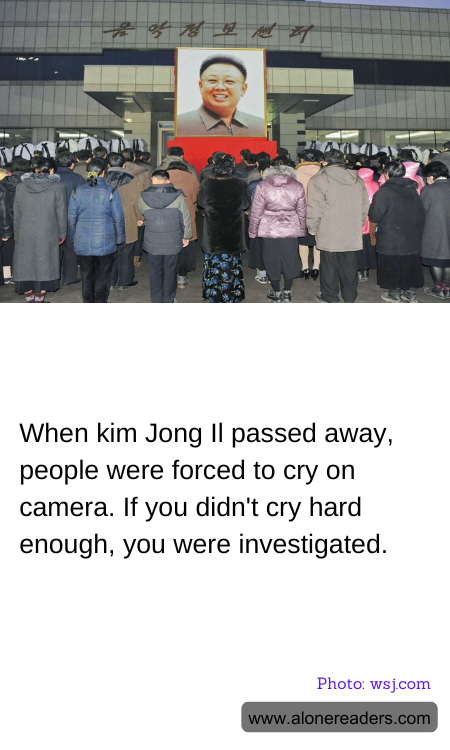
The death of North Korean leader Kim Jong Il in December 2011 marked a period of intense mourning in North Korea, characterized by an unprecedented display of public grief. The country, often enveloped in its own stringent governances and distinct political culture, witnessed scenes where thousands of North Koreans were seen weeping openly on television and in the streets of Pyongyang. These displays were not just expressions of sorrow but were also deeply intertwined with the political apparatus of the state.
In North Korea, the Kim dynasty is central to the identity of the state and the people. Kim Jong Il, like his father before him, Kim Il Sung, was not only viewed as the political leader but also as a paternal figure in North Korean culture. Their leadership is often mythologized, and their deaths are depicted as a profound loss for the entire country. This perceived relationship results in a deeply ingrained sense of loyalty and devotion among citizens, at least as portrayed by state media.
However, reports from defectors and international observers suggested that the mourning process was heavily orchestrated. The government allegedly mandated the mourning period, and there were widespread rumors that individuals who did not participate convincingly enough faced repercussions. Claims abounded that people were scrutinized for their grieving; not displaying enough sorrow could lead to investigations, and potentially, punishments. Such measures would be in keeping with the regime's use of propaganda and its control over public expression.
This requirement to exhibit certain emotions publicly underscores the regime’s reliance on spectacle and collective social behaviors to affirm loyalty and cohesion among its populace. The public mourning for Kim Jong Il was thus not only a reflection of genuine grief but also a choreographed part of North Korea’s political culture, serving both to consolidate loyalty and demonstrate the regime’s control over both the public and private lives of its citizens.
In this way, the death of Kim Jong Il illuminated the complex interplay of personal sentiment and political imperatives in North Korea, highlighting how deeply the state seeks to infiltrate and manage the emotional and everyday lives of its people. Such practices contribute to the Western perception of North Korea as an Orwellian state where the line between genuine emotion and performed loyalty is perpetually blurred.
