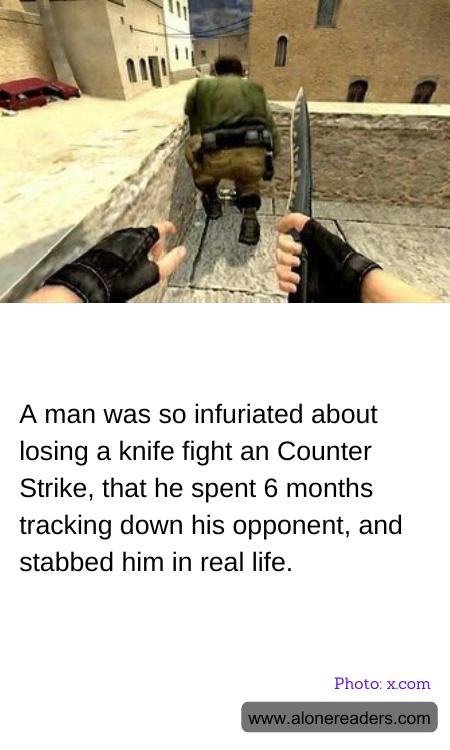
In a chilling manifestation of virtual gaming conflicts spilling into reality, a man was reported to have spent six months tracking down an opponent from the popular online game Counter Strike after losing to him in a virtual knife fight. The incident, which culminated in a real-life stabbing, underscores the dark potential for virtual animosities to escalate into physical violence.
The story began in the digital arenas of Counter Strike, a game where players often engage in combat through avatars. Knife fights, a common feature in such games, are usually seen as a test of skill and a matter of in-game pride. However, the virtual defeat apparently affected the assailant far beyond his virtual persona. Instead of shrugging off the loss as part of gaming, he harbored a growing grudge that extended beyond the pixels of his computer screen.
Over a period of six months, the man meticulously gathered information about his online adversary. His obsession led him to sift through social media, gaming profiles, and other digital breadcrumbs. The determination to locate his rival turned into a sinister invasion of privacy and personal safety. Eventually, his search enabled him to confront his foe in person, an encounter that shockingly mirrored their virtual skirmish, but with real and severe consequences.
The attack was not only a stark reminder of how online interactions can sometimes generate real-world hazards, but also highlighted the importance of digital ethics and personal responsibility. It raised critical questions about the psychological impact of virtual worlds and the extent to which they influence real-life behavior. Moreover, this incident sparked a debate on the need for robust mechanisms within online gaming communities to detect and mitigate escalating conflicts among players.
In response to this incident, gaming communities and developers might consider stricter moderation tools and more support systems to help players manage in-game conflicts healthily. On a broader scale, it prompts a reassessment of the social responsibilities of game developers and the community leaders who shape these digital landscapes.
Apart from the immediate legal consequences faced by the attacker, the case serves as a grim reminder of the potential for violence that can evolve from seemingly innocuous online interactions. As our virtual and physical lives become increasingly intertwined, the necessity for maintaining a clear boundary between them becomes ever more critical.
