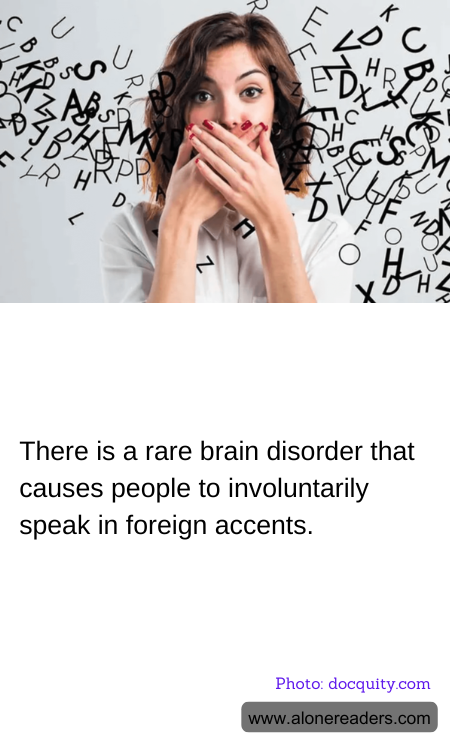
In the realm of neurological disorders, one particularly intriguing and rare condition is Foreign Accent Syndrome (FAS). This disorder leads individuals to suddenly start speaking with an accent that is perceived as foreign, different from their native accent. This can occur without the individual having any extensive exposure to the foreign accent they begin to mimic.
First documented in 1907, FAS typically arises after significant trauma to the brain, such as a stroke or head injury, although it can also emerge from migraines, developmental issues, or other neurological conditions. The syndrome doesn’t impart new language skills; rather, it alters the pace, intonation, and pronunciation of speech, giving the auditory illusion of a foreign accent. For instance, an American might inexplicably begin speaking with a German-sounding accent. Essentially, the changes are phonetic rather than linguistic.
The psychological and social effects of Foreign Accent Syndrome can be profound. Individuals with FAS often face challenges in personal relationships and social interactions. Being suddenly perceived as ‘foreign’ can lead to a sense of alienation and identity confusion. Moreover, because FAS is rare and outwardly unusual, it may not be immediately recognized by medical professionals, which can delay diagnosis and support.
Treatment for FAS is typically speech therapy, which aims to help the individual regain their original accent and improve overall communication. Additionally, counseling might be needed to help individuals cope with the emotional and social impacts of the disorder. The prognosis varies; some individuals may experience a significant improvement, while others might have persistent changes in accent.
What makes FAS particularly fascinating is not only its effects on the individual but also what it reveals about the brain's role in speech production. This syndrome highlights the complexity of the networks involved in controlling language and accent, showing how subtle changes in brain function can lead to surprising shifts in speech patterns. Thus, FAS not only challenges our understanding of neurological function but also our perceptions of identity and belonging based on speech.
