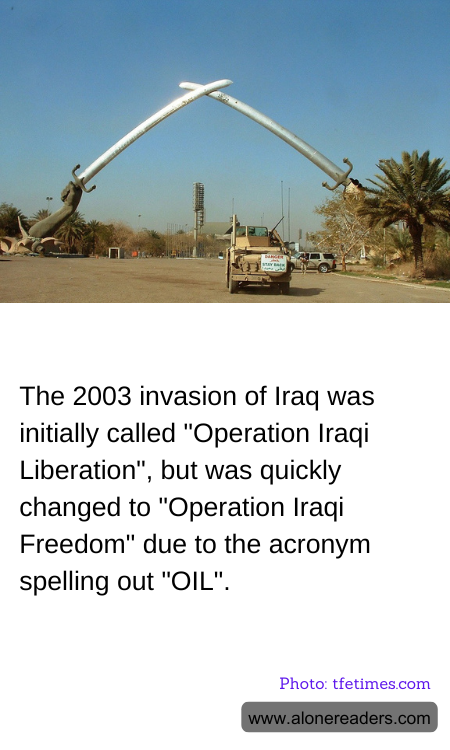
The 2003 invasion of Iraq, led by the United States alongside coalition forces, is a critical event in modern history that initially went by the name "Operation Iraqi Liberation." Interestingly, the name was soon changed to "Operation Iraqi Freedom." Speculation arose regarding the initial acronym "OIL," which mirrored the widespread belief or suspicion that one of the motives for the invasion was Iraq’s significant oil reserves. The swift renaming to "Operation Iraqi Freedom" repositioned the focus of the invasion toward the broader, more publicly palatable goal of liberating the Iraqi people from Saddam Hussein’s oppressive regime and promoting democracy.
The renaming was emblematic of the complex narratives surrounding the Iraq War. From the onset, the U.S. government justified the invasion with several key arguments, including the purported presence of weapons of mass destruction (WMDs), the enforcement of United Nations resolutions, and the desire to dismantle a regime that was seen as a threat to global security and human rights. However, the absence of discovered WMDs and the prolonged instability in the region led to widespread criticism and reevaluation of the war's motives and outcomes.
Moreover, the name change from "Operation Iraqi Liberation" to "Operation Iraqi Freedom" did little to mitigate concerns and critiques about the underlying reasons for the invasion. Issues such as control of oil resources remained a topic of intense debate and speculation. This aspect of the war highlighted the intersection between national security strategies and economic interests, particularly in a region as geopolitically sensitive as the Middle East.
The impact of this strategic decision has had long-lasting effects on international relations, U.S. foreign policy, and the geopolitical landscape of the Middle East. The consequences of the invasion, from the destabilization of Iraq to the rise of extremist groups like ISIS, have been profound and far-reaching, prompting ongoing discussions about the role of military intervention in foreign policy and the true cost of such actions on global peace and security. The legacy of the invasion, therefore, remains a key point of reflection for assessing contemporary international relations and ethical governance.
