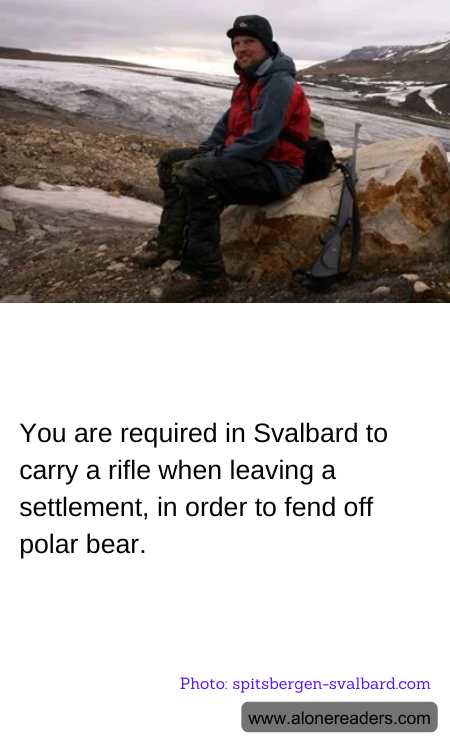
In the remote and rugged wilderness of Svalbard, a Norwegian archipelago situated deep in the Arctic Ocean, unique safety measures are necessary due to the local wildlife, particularly the presence of polar bears. Svalbard is home to more polar bears than humans, and these majestic yet potentially dangerous animals roam throughout the archipelago. Given the real threat posed by polar bears, local laws mandate that anyone leaving the settlements must carry a rifle for self-defense.
This regulation underscores the gravity of polar bear encounters in the region. Polar bears are the largest land carnivores, and in Svalbard, they can appear anywhere and at any time. Unlike other areas frequented by polar bears, such as mainland Norway or Canada, where deterrents like bear spray might sometimes be recommended or sufficient, in Svalbard, the law specifies firearms as a necessary precaution. This is partly because encounters can occur suddenly, due to the polar bear's excellent camouflage in the snowy environment, and the often limited visibility due to weather conditions.
Tourists visiting Svalbard are often surprised by this regulation but quickly understand its importance for safety. Guided tours in the region are equipped not only with knowledgeable guides but also individuals specifically tasked with bear watching and safety, including the handling of firearms. For those staying longer or venturing out independently, local authorities offer mandatory safety courses on how to handle encounters with polar bears, which include training in the use of rifles.
This aspect of life in Svalbard is a poignant reminder of the challenges faced by communities living in proximity to apex predators, and the measures that can be taken to coexist with them safely. It also highlights the importance of respecting wildlife and understanding the ecosystem's dynamics where human populations encroach upon natural habitats. The regulation not only ensures the safety of humans but also protects polar bears from unnecessary harm, promoting coexistence in this fragile Arctic environment.
