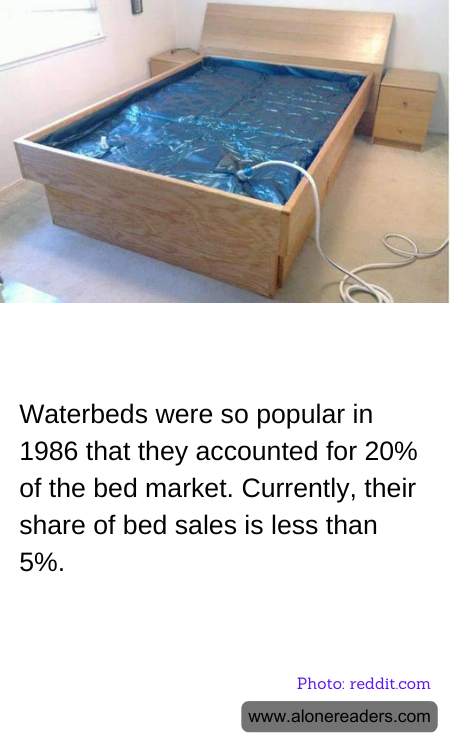
Waterbeds, which reached the peak of their popularity in the mid-1980s, once claimed a significant portion of the U.S. bed market. In 1986, they accounted for an impressive 20% of all bed sales, emerging not just as a trendy bedroom fixture but as a cultural icon synonymous with luxury and innovation. The original appeal of waterbeds lay in their novelty and the unique sleeping experience they offered, believed to offer benefits such as improved back support and better sleep quality because of their ability to contour precisely to the body.
However, the tide has significantly turned since those boom years. Today, waterbeds make up less than 5% of bed sales, a stark drop that highlights shifting consumer preferences and advances in bedding technology. Several factors contributed to the decline of waterbed popularity. Firstly, the maintenance associated with waterbeds, including the need to fill them with water, the risk of leaks, and the requirement of special sheets and heating systems, made them less convenient than more conventional mattresses. Furthermore, the initial allure of the waterbed's novelty gradually waned, and the introduction of memory foam and other high-tech materials provided new, hassle-free options in comfort and support.
The modern market trends favor mattresses that are easier to maintain and move, align better with minimalist lifestyles, and offer customizable options to suit individual health and comfort needs. Despite the dwindling numbers, waterbeds still hold a niche market, supported by enthusiasts who prefer the distinct feel and potential sleep benefits they provide. Manufacturers have also attempted to innovate with designs that mitigate some of the traditional downsides of waterbeds, such as incorporating wave-reducing structures to prevent the unsettling motion that earlier models were known for.
While it's unlikely that waterbeds will ever dominate the market as they once did, they serve as an interesting footnote in the evolution of sleep technology, a testament to how consumer preferences evolve over time, influenced by a blend of cultural trends, technological advancement, and the ever-changing quest for a good night's rest.
