More About This Card
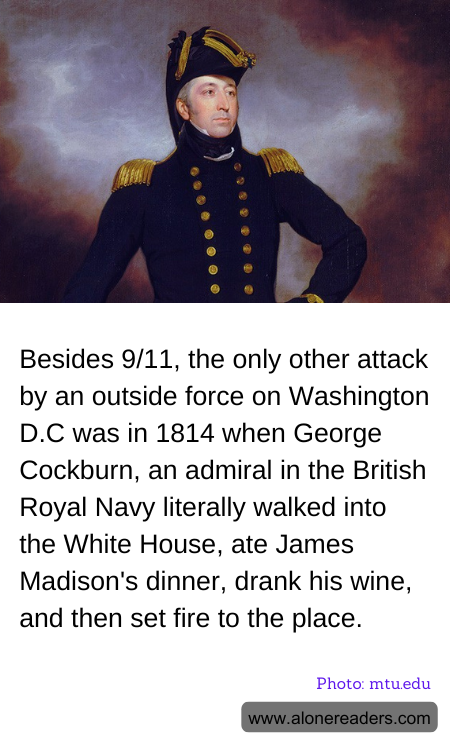
The attack on Washington D.C. in 1814 stands as one of the most audacious episodes in American history. Amidst the broader conflict of the War of 1812, British forces, led by Admiral George Cockburn and General Robert Ross, orchestrated a striking assault against the United States’ capital. This event marked the first and only other time besides the tragic events of September 11, 2001, that Washington D.C. had been compromised by an external enemy force.
The British were motivated by a desire to retaliate against the American attacks on the town of York in Ontario, Canada, which is now Toronto. The War of 1812 itself was a complex affair, with its origins tied to issues such as trade restrictions brought about by Britain’s ongoing war with France, the impressment of American merchant sailors into the Royal Navy, and territorial expansionism in North America.
The attack on August 24, 1814, was as humiliating as it was destructive for the Americans. After defeating American forces at the Battle of Bladensburg, British troops marched into Washington D.C. with little resistance. What followed was not just a military occupation but also an act of vengeance; British forces set fire to major government buildings, including the Capitol and the White House. According to popular accounts, Admiral George Cockburn entered the White House, where he and his officers reportedly sat down to eat dinner that had been abandoned in the rush to flee the city. To add insult to injury, Cockburn is said to have toasted President James Madison before setting the presidential residence ablaze.
The fires set by the British were extensive and left significant marks on the city. Most governmental buildings were burned to the ground, with only the U.S. Patent Office spared after its superintendent pleaded the case that it contained valuable knowledge beneficial to all mankind. This assault has been famously depicted with images of the Capitol and the White House in flames, symbolizing a low point during the war for the United States.
Nonetheless, this audacious attack did not break the American resolve. Instead, it may have galvanized the nation, as the United States bounced back quickly from the invasion. Just a few weeks later, American forces would go on to achieve a pivotal victory in the Battle of Baltimore, which gave birth to the American national anthem, "The Star-Spangled Banner." The resilience shown by the Americans would eventually help bring an end to the war with the signing of the Treaty of Ghent in December 1814. The war, and specifically the burning of Washington, had profound effects on the national psyche, influencing the United States' future diplomatic and military policies.