More About This Card
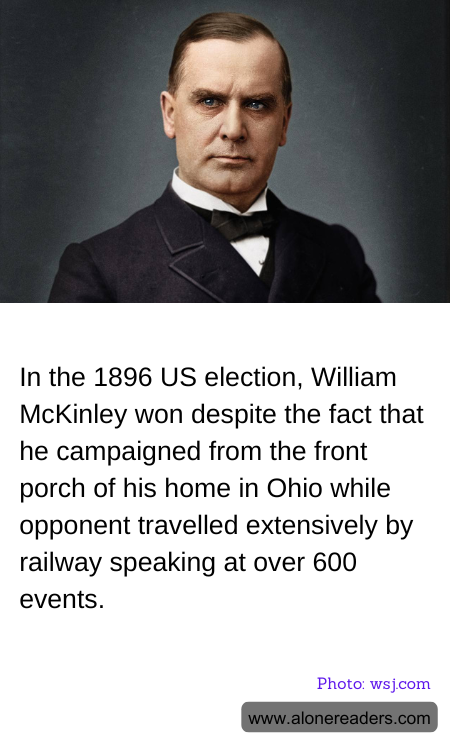
In the 1896 United States presidential election, William McKinley pursued a remarkably innovative campaign strategy that deviated significantly from the norm of the times. Instead of embarking on an extensive tour across the country like his opponent, William Jennings Bryan, McKinley chose to campaign right from the front porch of his home in Canton, Ohio. This decision was based on several strategic considerations and ultimately proved to be a highly effective approach.
William Jennings Bryan, McKinley’s main rival and a dynamic orator known for his powerful "Cross of Gold" speech, adopted the traditional method of campaigning by traveling extensively. He covered thousands of miles via railway and spoke at over 600 events, making his campaign one of the most vigorous in history. Bryan's approach was rooted in the belief that direct engagement with voters across the country was the best strategy to galvanize support, especially given his appeal to the rural and agricultural communities who were hit hard by economic issues.
In contrast, McKinley's campaign, orchestrated by his astute campaign manager Mark Hanna, was characterized by a controlled environment where he could deliver speeches to delegations that visited him in Canton. This "front porch" campaign drew crowds from across the country to McKinley’s home, turning these visits into significant media events. The strategy was not only innovative but also allowed McKinley to project a stable and presidential image, minimizing the risks of gaffes or inconsistencies that could occur in the more unpredictable settings of nationwide touring.
Moreover, while McKinley stayed at home, his campaign leveraged the power of emerging mass media tools and effective fund-raising. Newspapers sympathetic to the Republican cause covered these front porch speeches extensively, amplifying his message far beyond the physical limits of his home. His campaign also effectively utilized posters, leaflets, and other printed materials to disseminate his viewpoints and policy positions.
The juxtaposition of McKinley's stationary, dignified campaign with Bryan's vigorous but exhausting railway trips painted a picture of stability versus unpredictability. Financially backed by business leaders who feared Bryan's populist policies, McKinley had sufficient resources to dominate the airwaves and print media. His approach resonated particularly well with the urban and industrial centers, which were crucial for securing electoral victory.
Ultimately, McKinley’s strategy proved successful as he won the election by a considerable margin, securing his place as the 25th president of the United States. His victory underscored a shift in political campaigning, illustrating how media coverage and strategic communication could effectively sway public opinion without the exhaustive physical travel once deemed necessary. His presidential wins also highlighted the growing importance of the urban electorate, a trend that would continue to shape American political strategies in the subsequent years.