More About This Card
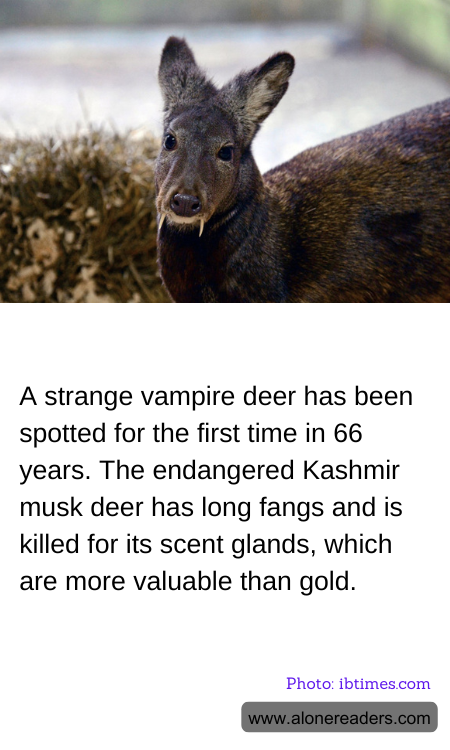
The Kashmir musk deer, a rare and elusive species, has recently been sighted for the first time in 66 years, sparking both excitement and concern among wildlife enthusiasts and conservationists. Known for its strikingly long fangs, which resemble those of a vampire, this small deer is native to the dense forested slopes of Afghanistan, Pakistan, and India. The fangs are not used for sucking blood but are rather used by males during mating season to compete for females.
Despite its fascinating appearance and behavior, the Kashmir musk deer faces threats from poaching due to the high value of its musk gland. Located in the abdomen of only the males, the gland produces a secretion that has been highly prized as a traditional medicine and perfume ingredient. The scent derived from this gland has been described as more valuable than gold, leading to rampant illegal hunting that has severely reduced their numbers, making the Kashmir musk deer a target for urgent conservation efforts. This recent sighting brings some hope that the species is still persisting, albeit in small numbers, but it also highlights the critical need for better protection and understanding of this unique animal.
Conservationists stress the importance of strengthening anti-poaching laws and enhancing community awareness about the species’ endangered status. The IUCN has listed the Kashmir musk deer as endangered, and it is crucial that habitat protection measures are put in place to ensure these mystical creatures do not vanish. Research and monitoring must also be ramped up to gain a clearer understanding of their population size, reproduction, and behavior to guide conservation strategies effectively. The sighting has indeed rekindled hope but has also underlined the urgency of conservation efforts needed to ensure that this intriguing creature does not become a footnote in the annals of extinction.