More About This Card
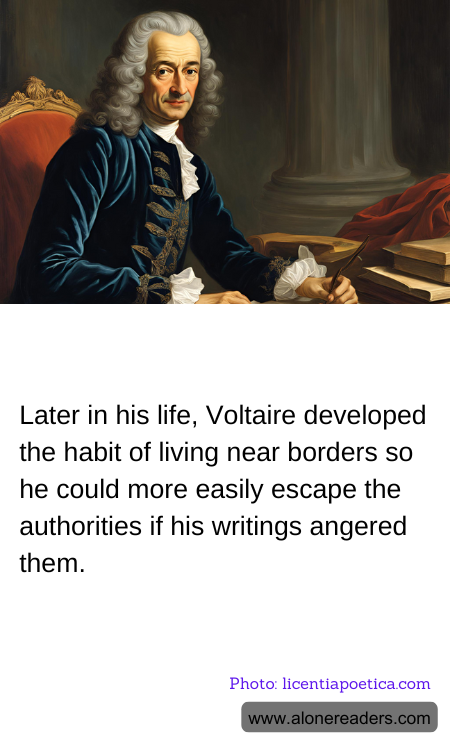
Voltaire, one of the Enlightenment's most insightful and daring philosophers, was well aware of the consequences that his sharply penned satires and criticisms could invoke. His writings often provoked the ire of powerful figures, including monarchs and the clergy, leading to frequent clashes with the authorities. To mitigate the risks associated with his provocative works, Voltaire devised a pragmatic strategy of residing near political borders, facilitating a quick escape should the need arise.
This cunning habit of living near borders underscored Voltaire's intricate relationship with freedom of expression and personal safety. It allowed him to continue his literary work with a relative assurance that he could evade oppressive regimes that might seek to imprison him or worse. His residences included locations near the borders of France, Switzerland, and Germany, providing him multiple escape routes. One of his most famous havens was Ferney, situated near the French-Swiss border. Here, Voltaire not only wrote prolifically but also engaged with a wide network of European intellectuals, further spreading his ideas.
Voltaire's choice of residence was not just a tactical retreat but a statement of resistance against the censorship and persecution that thinkers of his time often faced. It highlighted his unwavering commitment to the pursuit of truth and justice through his writings, despite the personal risks involved. This lifestyle choice helped him to navigate the tense political landscapes of Europe during the 18th century, continuing to stimulate societal introspection and reform through his works.
Moreover, Voltaire’s border residences were more than mere safe houses; they became centers of intellectual activity, attracting thinkers and visitors from across Europe. These homes were not just physical structures that provided safety, but vibrant hubs of Enlightenment thought, filled with lively discussions and debates that shaped the intellectual contours of the era. Thus, Voltaire's decision to live near borders was emblematic of his life's work: a delicate balance between provocation and prudence, allowing him to challenge societal norms while strategically avoiding the full wrath of those he critiqued. This blend of courage and caution in Voltaire’s personal life and public engagements remains a powerful legacy of his commitment to intellectual freedom and social critique.